• Published on

    stories Of Trauma

    Image description
    Once again I am participating in the Himalayan First Draft Club, an online opportunity to just help me get writing again. Here is today's writing: a review of the first story in Mahasweta Devi's "After Kurukshetra" (2018 Seagull Books) and its cross section with a conference I attended this weekend on Trauma Informed Narrative Theory (trauma counseling with a story-telling focus). Both are informing my approach to the story I Intend to eventually write that explores a cross-cultural relationship between women.

    Mahasweta Devi’s short story Panchakanya was first published in 2000 in Bengali. The 2018 Seagull Books translation into English, by Anjum Katyal, of After Kurukshetra is a compilation of three short stories portraying the time of the Mahabharata (3137 BC) in the aftermath of the epic Kurukshetra war.  from the perspective of the women.. The story of “The Five Women '' is a poetic and moving femenist portrayal of the difference of moral, economic, psychological, and spiritual values of women of royalty and tribal women. 

    The Kurukshetra, as described in the ancient Sanskrit epic, The Mahabharata, has been considered a “righteous war” fought between two royal cousins (the Kaurava and Pandava princes). Historically it may have been only a small dispute that was written down as a gigantic epic to illustrate the four main values of Hinduism, the puruṣārthas: Dharma (righteousness, moral values), Artha (prosperity, economic values), Kama (pleasure, love, psychological values) and Moksha (liberation, spiritual values, self-actualization). 

    Mahasweta Devi, illustrates how war between cousins, war of greed of men, created a whole class of widowed women. Widows of  the princes who died in “valor” and widows of the foot soldiers who died by the droves, senselessly are brought together for a short period of time, while “the earth of Kurukshetra was scorched rock hard by the funeral fires” (p2). Her understanding of tribal culture is apparent as she illustrates how Adivasi women, connected to nature, face a dramatically different reality from that of the stifling, silently, decaying widowhood of the Hindu queens and princesses. Though both cultures are subject to patriarchal power structures that seem to perpetually lead to senseless wars, the Adivasi widows’ future is more vibrant and alive than that of the royal women, who are destined to continue their lives as if they were dead and decaying.

    Ironically I attended a conference on trauma just after I had read “The Five Women”, that characterized three types of trauma in every human life. The Christian Counseling perspective of the conference had so many parallel conceptions, in some of the details. It spoke of human trauma that leaves us like: the Orphan (betrayed and abandoned), the Stranger (broken and powerless), the Widow (love lost and abuse). The spiritual lesson is how to move past suffering and have it reveal one’s true calling as: Priest (to manage the rituals of grieving)t, Prophet (to tell the truth and be creative), and Queen/King (to lead and make space for flourishing). 

    The parallels to how Mahasweta Devi exposes the differences between Hindu and Adivasi approaches to trauma may not be immediately apparent. I am only just beginning to ponder the similarities. But through the telling of stories we often are exploring the process of trauma and the prospects of hope. It would be a most interesting debate to have with those of these particular various persuasions, that I will continue to ruminate over and hope to someday tell a story that brings these world views together in discourse through my next book (a novel- anticipated title: “Lives We Cannot Keep”)

    There is certainly so much more for me to write about both the conference and the short story, but I wanted to simply capture how my many worlds that I navigate through sometimes intersect. How all our worlds and our worldviews are constantly moving away from and towards each other. If you have the opportunity to read “After Kurukshetra” please join me. There remain two more stories in the collection of 54 pages, that I trust will bring more commentary on the Mahabharata and inspire more thoughts on Trauma Informed Narrative Theory.
  • Published on

    REImagining the Tales of Hazaribagh

    What world have I stepped into?
    Picture
    Mihir Vatsa in Tales of Hazaribagh (Speaking Tiger 2021) invited us on his journey into the world around his hometown; a small town of man-made lakes and elevated climate that wooed visitors over the last couple of centuries. A few settled there, like his family, and so it became his hometown. In his poetic prose, he says little of the people of the town or the traditions of his family. His return to his hometown is not to go back into his childhood and the place of his ancestors. Instead he is in search of refreshment and relaxation in the setting: the surrounding forests, hills, plateaus, valleys, rivers and waterfalls. He finds healing here after becoming overwhelmed by the stress of urban life. 

    What follows is not so much a review of his writing, as a pondering of what we might be missing from seeing only this perspective. His perspective is valid, genuine, and authentic. We end the book knowing he has found the peace he has been looking for and in that we also find comfort. 

    While he observes and articulates the power, energy, control, and the preservation/conservation/beautification of this forest world, it is from his position of privilege and his license to easily take the time to explore, move around with relative ease, and articulate how it impacts him. So even though he is returning to his “hometown” he is still primarily observing it as an outsider.

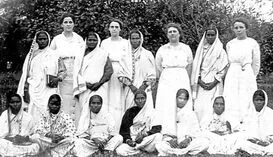
    This is not a criticism, for my first attempt to be an author began also as a journey of returning. In so doing, I discovered myself and my roots, as recorded in the biography of my great great grandfather: Among the Original Dwellers: Remembering Ferdinand Hahn (Lulu: 2019). I embarked on this journey to rediscover the first generation that connected my family to India in the late 19th century. I was born into an American medical missionary family, my father was the fourth generation missionary and the third generation born in India. I spent most of my formative years in India. With that kind of background it is hard not to feel a little Indian,  though my passport says I am American. To further complicate my identity, the ancestors who lived in Chota Nagpur from 1869-1915 were Germans living in British India.

    Researching their interesting lives brought me into contact with Christian Adivasis, many were educated and urban, but all longed to stay connected to their cultural heritage and know their history. I now hope to write a novel that explores the relationship of a German missionary wife of the 19th century (ie. my great great grandmother) and an Adivasi woman. It is clear that I cannot do that until  I have done so much more research and have more experience to understand the Adivasi perspective.

    Taking on this challenge I try to read whatever I can about the Adivasi. I look for how they are portrayed not only in books but other mediums, and I gravitate towards whatever they themselves have written. However, Adivasi literature is only an emerging genre. Historically non-Adivasis write about Adivasis. True Adivasi literature, by Adivasis, is immersed in the tangle of translation. I, for example. Write in English, while working on improving my Hindi, and Adivasi culture remains predominantly an oral tradition. Each tribe has their own language with regional variations. When an Adivasi writer manages to write of their own culture, often it must be translated into multiple languages to be understood by their own people.

    Presently I gravitate to writers who have perhaps six degrees of separation from my primary subject. A great example is Mihir Vatsa’s Tales of Hazaribagh: An Intimate Exploration of Chhotanagpur Plateau.(Tiger Books: 2021). I truly enjoyed the read, for I also long to return to my childhood home (Mussoorie UK) to explore its beautiful landscape and landmarks and fascinating history. But he, like me, will perpetually be the outside observer, even in our own hometowns. 

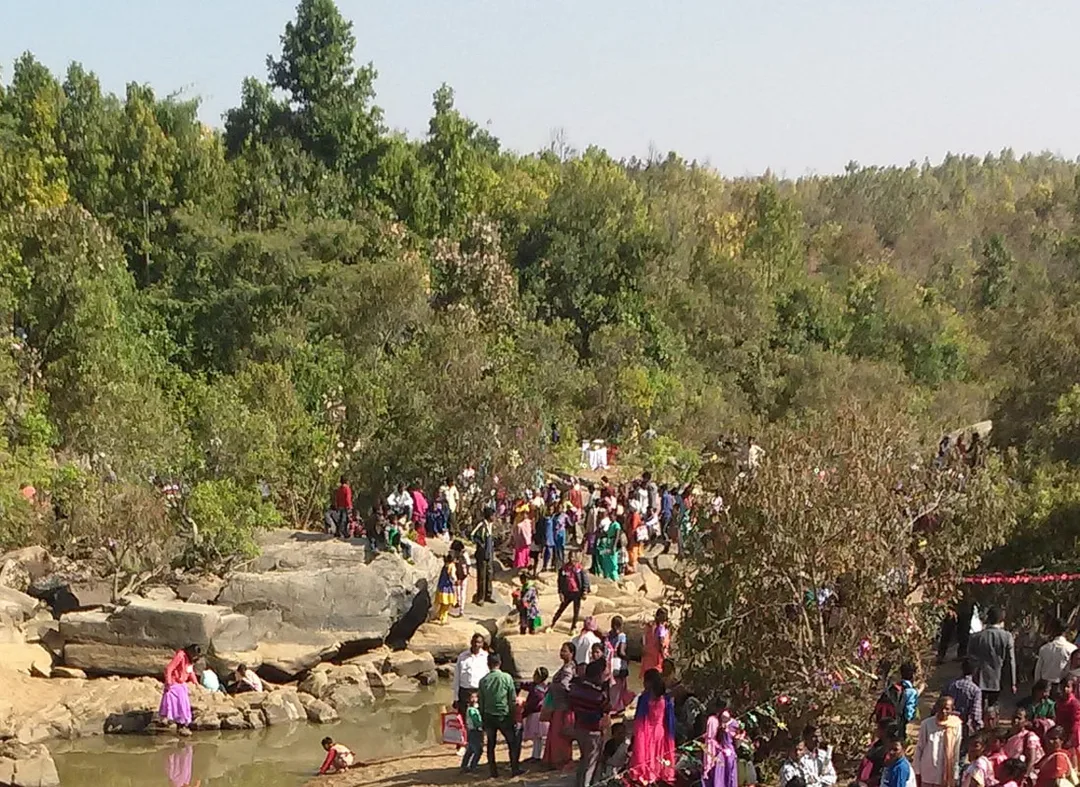
    As he wandered through the Sal forests, hills and plateaus, in pursuit of finding a little known waterfall, he often crossed the paths of the people who lived there. Often they looked at him puzzled and gave vague directions. Sometimes they dropped whatever they were doing and led him to the very spot he was looking for. I keenly read those parts, because that was the connection I was looking for. Vatsa was looking for the healing power of nature. I wanted to know more about the perspective of the people he met, and what wisdom they might have of this world.

    I still mostly have questions:
    Were they Adivasi?
    Did they live there since their ancestors had cleared the land?
    How were they impacted by the “development” that encroached their habitat, and visitors like Vatsa?

    Where is that story? And can an outsider ever really tell it?

    What, if any, significance was this waterfall, the rivers, the forest, the hills, the land? Or as Adivasi say "jal, jungal, jamin".

    I began with: What world did I step into? That is really all we do as outsiders. Many worlds have been created that millions have stepped into and feel that it is familiar enough to be "home". The Star Wars series took us to “a long time ago, to a galaxy far away…” 

    How do we step into a real world, not of our making, but certainly of our (generically speaking) curiosity, meddling, exploring, and even exploiting?
    How do we step into that world and truly see it and know it?

    I am grateful for Tales of Hazaribagh, because it moved me into the setting of Hazaribagh, Jharkhand. Into the sal forests and rocky rivers that I have only had the privilege to glimpse briefly on my periodical visits to Jharkhand from 2016 - 2019. I've been jotting down my perspective in this blog and the journey has been transformational.

    My ancestors also wrote down what they perceived, explored, discovered, settled, etc. I found that they made a remarkable attempt to understand the Adivasi, who they lived among. And found they are still remembered: Ferdinand Hahn, wrote down Oraon folklore and created a Kurukh grammar that is still used today. In remembering his life, I became truly intrigued with the place and people and times that he lived in. 

    I long to step into that world and rediscover it, not just for myself but for all of us to truly appreciate the landscapes, landmarks, and stories. It is not just a world that heals, it is a world that teaches and perseveres. It is a world, if we only could step into it, that could heal, like Mihir Vatsa in the beauty of Hazaribagh.

    I was just reminded that when I first went to Jharkhand I told an Adivasi elder that I have come to find my roots. He replied "That is good, from the root comes great trees."

  • Published on

    Personal Reflection on Race (revised)

    Picture

    AACC Black Lives Matter Solidarity March, on Sunday June 7, started at 6 on Park Street by the Humanities building of the UW-Madison (Wisconsin)

     My friend, Carlos Gonzales, up in Minneapolis challenged his friends to tell stories about their experience with race in America. Too often we are shouting slogans and sound bites at each other, and not stopping to hear each other’s stories. Mine never seemed to be an American story, having grown up in India and gone to an international school, Woodstock in the foothills of the Himalayas. I am American and lived here now for 45 years and still feel a little Desi (a person of South Asian birth or descent who lives abroad, while I was not born in India I went when I was one, however, my father, grandmother and great grandmother were all born in India). The comedian Hasan Minhaj (https://www.youtube.com/watch?v=i_FE78X-qdY) in a recent youtube presentation kind of called out all the American Desi community (which includes the expat Desi folks like me) to stop thinking they are not part of the story of race in America. So here goes my attempt to tell my story of discovery of white privilege.

    What I love about India is it’s diversity. But not all diversity is dealt with in a healthy way. There are divisions over language, region, religion, class, gender, age, and uniquely for India, caste. As a kid I was pretty clueless about such things. Which, by the way, is one of the first signs of privilege, because if you are from any group, such as caste, it defines your every movement. Oh, I was aware that it was a bummer being a girl in India. I hated the groping in crowds and the cat calls, the misogyny I experienced was benign compared to what many women experience. I had a strong mother, who taught me to be strong. I had little to fear. (Again, privilege removes your fear of your place in society....and often replaces it with plenty of other fears that plague the privileged soul about that dangerous world out there, the unknown.)

    Let me digress a bit by telling my Dad’s story. He was born and raised in India and started his college years at Allahabad University in India. There his Indian friends told him that he could not join them in the “Quit  India” protests. On campus he was their friend, but on the street he was white and represented the British and they would have to beat him. Only then did he think of himself as white. He realised, he was not Indian (by race), he was not British, and the only group that felt outside like him were the Anglo-Indians, but they also were not like him. 

    Being white, is such a social construct. In India in the 1940s it meant being English or British, even if you were not. My family is German American, but we have lost what it means to be German here in America, though it is more of a diverse country than India (and designed that way). We check off "white" on surveys.  But for most of its history great efforts have been made to wipe out our ethnic identities in America (one of the reasons I struggled with the American education system and decided not to be a teacher, something I regret that I didn't stick with to be an influencer of a broken system).

    African-Americans (Blacks) were predominantly brought here to this country against their will, unlike my ancestors who came for "opportunity". "Black" became a social construct as their identity as West or East Africans was deliberately and completely wiped out of them, they no longer spoke their languages from the regions of Africa where they came, from their tribes; given names of the people who owned them and in many cases "fathered" them.

    For us German Americans, perhaps the largest immigrant group from Europe spread across America there was a more privileged story, for we came to own just a little piece of property or to run factories in cities like Milwaukee. We came because we were too conservative or too liberal for the Federation of German States, and are diverse in our thinking, but held together for a long time by language and place of origin. Germans came since the beginning of America, the radical thinkers came after 1848 and there were other waves as America wiped out the indigenous peoples and settled through out the midwest and mountain states. Until World War II (not one) did many still go to church services that were held in German and read German-language newspapers. But both World Wars, fought because of German expansionism, were the death toll to our German identity for those Americans of German descent. We are just white-Americans now, and despite a period of extreme prejudice against our Germanness have merged into the privilege of being white.


    Not that I understood much about my German roots, or American roots, or even Indian roots (five generations have lived most of their lives there). When I returned to America to attend college at 18 years old I had one very eye opening experience my first semester at the University of Wisconsin in Madison. I began school the mid-year. And January through April were mostly spent trying to survive the winter going from one class to the next. By May everyone was outside! I suddenly realised I was at a major university of 75,000 students, and couldn’t figure out why that made me miserable. One day I was walking on Park Street next to the Humanities building and ahead of me I saw a group of Black Sorority sisters. My heart leapt for joy; I was so glad to see them. Of course as they passed my silly white grin with disdain, I realised they weren’t “my people”. But I felt like they were. I suddenly realised what was making me miserable. wasn’t used to white crowds. They scare the b-jeepers out of me. I was use to crowds in India on trains at the bazaar at a Mela; there are always people around everywhere you go in India, I was used to being in a sea of color, not a sea of white.

    I spent the rest of my college years learning about racism, classism and diversity in America and India, and I hung around mostly foreign students to feel “at home.” My favorite song that I use to sing to my friends back then was: "This world is not my home, I'm just a passing through." My life has been spent trying to figure out how to be a responsible citizen in this world, "in the world", without becoming a "of it." And I am constantly reminded that the world, the society I live in is in much need of transformation, of redemption. But the harder lesson is to discover how much I am co-opted into the world around me and that I too, or I especially, am in need of transformation. I believe it is my "white privilege" that makes it hard for me to see that I need to take steps to move into the world and life of the other. I have choice of which world I will live in.


    To this day I still am not comfortable in all white churches or even mostly white, because of what I am familiar with. I do go there to support my family, or other reasons.You definitely won’t find me in a protest of white people, even if I believe in the cause, and only have been to a Reggae concert cuz that was diverse enough for me.

    I hate the fact that Sunday is the most segregated time in America, as MLKjr pointed out. My last few years in Miami I went to a black church, since I was living in a black neighborhood. The pastor really wanted me to become a member. I wondered how many whites were members of the African Methodist Evangelical denomination: yes, I know there are whites in Africa too. I realised that I was not accepted by everyone at church. I understood why. Many people lived all week in a white dominated world and this was one place that was their own, where they could be free to be themselves. Only a few resented my presence. But I told my pastor that I was only going to be in the church for a season and that it would require me a true life-long commitment to stay and be part of the reconciliation that the spirit of God wanted for Christians. Some black move to white churches to help break the divide, very few whites have dared to commit to this. I was willing, but had another calling to another marginalized people that are in need to be reconciled to God, each other, to their nation and to outsiders. But it made me aware that for those of us who can choose where we want to live (there is rarely red-lining for us) that we rarely choose to live incarnationally (among the other).

    I was actually dismayed that I could only virtually attend the Black Lives Matter rally this Sunday that began at that exact spot where I had my whiteness revelation. I was saddened to hear that other white and hispanic churches did not join the African American Christian leaders of Madison, and held separate prayer walks, rather than join in. How can God's Spirit work to unite us if we don't gather together?

    Anyone who knows me, knows I try to break out of and disassociate myself from privilege, I tend to gravitate towards the marginalised. My kids even accuse me of loving the spirit of poverty a little too much. And I laugh because as much as I pride myself as having lived for so long at the poverty level, I have been so privileged, I am so wealthy, I have access to networks and safety nets and resources and relationships that can only be seen as privilege.* And most of those networks, safety nets, resources and relationships are white….just like me. I tried to be a connector to connect those without such privilege to the ones so readily available to me. Until I realised that was also coming from my position of privilege: I am here to help you. More and more I know that I need the other to help me, to free me, to make it possible for the Great Reconciler to do the impossible work of truly reconciling us who are divided by race, class, gender and politics.. 


    When I began really studying, about a decade ago, my family’s history with India have I began to understand my own white privilege. Like me, my ancestors tried to be connectors for the Adivasi (tribals) to resources like education and economic development. As I came to understand their limited perspective and prejudices, I began to become far more interested in the resilience of the Adivasi themselves. What were their resources, their networks, their safety nets that has helped them survive a long lasting attempt to wipe them out and take over their land? I began to understand what networks, safety nets and relationships I had that put me in a more privileged position from others and how I had to stop and listen and learn from others.

    It is what I have learned in my various community organizing efforts to find the local leadership and to build community from the grassroots up. An approach that too often dominated by privileged whites, I see it a lot in Madison. I have seen it work the best when it is run by the people themselves, with different kinds of leadership (not as hierarchical) and organization (such as BLM). It is sometimes hard to do things a new way. But the definition of insanity is doing the same thing the same way and having the same results. 

    I have to set down my whiteness that I take for granted and listen and learn to those who are crying out. As a Christian I also see that is how God works. He doesn’t even take his privilege as God for granted and humbled himself and came to live among us. He hears the cry of the downtrodden, the blood of Abel cries out to God who heard the cry of Ishmael, the cry of Rachel weeping over her slaughtered children, Jesus wept for a city like Jerusalem knowing well that it will go through so much strife and never live up to its name as the city of peace.

    I am no longer an 18 year old naive white girl. I know a lot more now, and know that being given more, more is required of me. I am grateful to my current pastor, Alex Gee of FOL, who preached about Peter and Cornelius today. Reminding me again that it is not a story about the conversion of an outsider, but about the further conversion of a born-again, spirit-filled, Bible believing Christian, the founder of the Church: Peter. He needed to realise that he needed to 
    set aside the law with its commands and regulations (systems and mentalities) that had divided Jews from Gentiles, men from women etc, etc. A law that God himself had imposed to set a people apart, but it had created a wall of hostility and Jesus broke that wall down. But just like Peter, it takes some major transformation for us to live it out. Yes All lives matter, yes we are (or can be) reconciled to each other by God....but it is a life long effort to live it out as if it were so! We are in constant need of transformation, and we must not hide behind our privilege to not move out of our comfort zone and be a part of the change that is comin' down the road. Will we show up to be part of what God is trying to do in this country: to heal, redeem, strengthen, and reconcile people to himself and to each other.

    In all that is happening these days: pandemic, economic crisis, racial disparity, starving migrants, locked up migrant children, pollution of our air and seas, domestic violence, human trafficking, and on and on. I realise that I am privileged because my heart isn’t broken enough! I don’t feel the pain. In fact I avoid feeling pain…..….Maybe that’s why I am down on my back for over a month, first with a cold, then a back injury, then vertigo, now a dis-functional thyroid. Pay attention and feel the pain, listen and learn. Lay down your privilege like Jesus did.
    -------------------------------
    *Note I am mostly talking about generic privilege. Because I know too many Hispanic and even black, and people, such as Indians in India, that are unable to recognize that their privilege may be giving them a different perspective on this whole race and privilege discussion. It is important to step back and check out your own privilege, it may be in an a arena....for example if you were privileged to get an education or to be literate. My greatest privilege is that I am a Christian. As a child of God that is a huge privilege and a huge responsibility to properly represent my Lord and Savior (not to be a good little Christian white girl)


  • Published on

    Sanskriti

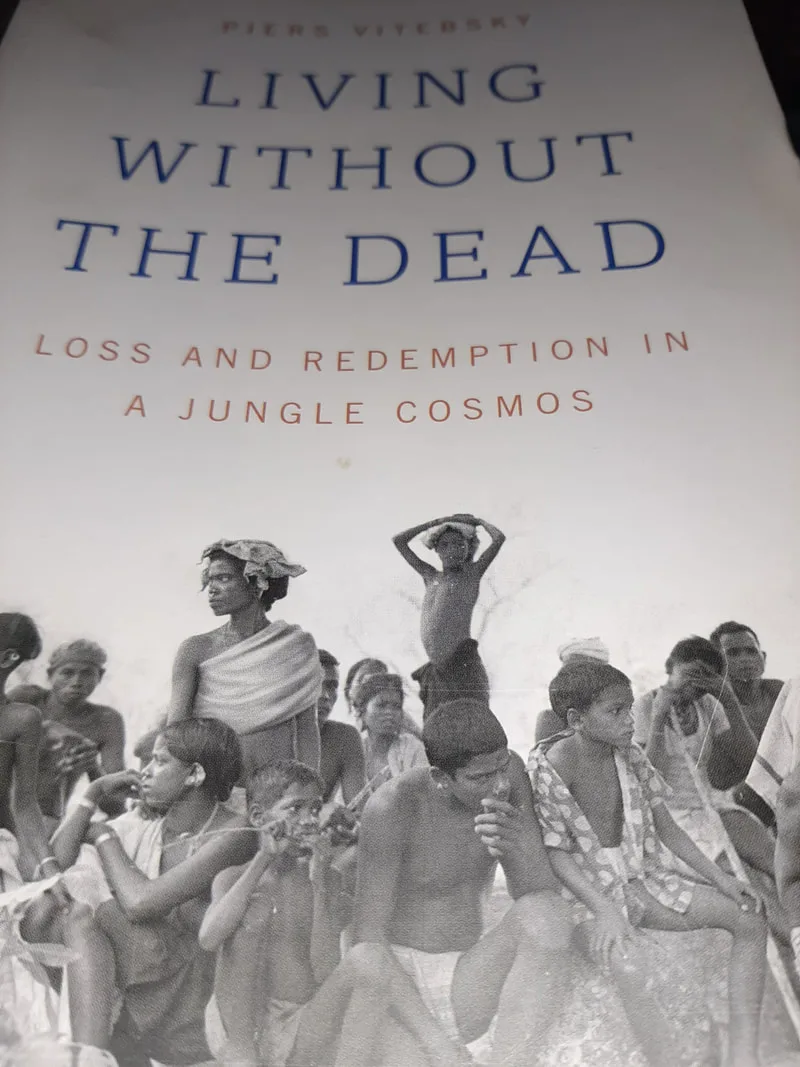
    Upon completing an incredible 50 year study of  and relationship with the Sora tribe of southern Odisha by Piers Vitebsky in “Living Without the Dead: Loss and Redemption in a Jungle Cosmos”(Chicago University Press: 2017), I wish to share a portion of his conclusion that describes the importance of preserving Adivasi culture. How literature, language, social well being and relations and even ecology are all tied together with our past, present and future.

    Picture
    "By the 1990s there was a growing awareness of the worldwide threat of the extinction of plants, animals, and ecosystems. The United Nations Convention on Biological Diversity (UN:1992) was closely followed by the International Union for Conservation of Nature’s Red List of Threatened Species (www.iucnredlist.org), which established a grading of endangerment (Moseley: 2012.2) This approach was soon extended to the idea of endangered languages (UNESCO 2010). Though languages are not simple entities, and their boundaries are debatable, linguists reckon that there are only 6,000 languages surviving in the world today, and that half of these are endangered (Evans:2019; Moseley:2012). The greatest threat to a minority language world-wide is schooling in a dominant language. Whatever the benefits of residential schools, they are also a notorious medium of alienation, separating children not only from their parents bu also from their cultural and linguistic milieu. However, many people speak a language now, if i is not spoken by the children and carried forward into their adult life it can become extinct in a generation. Sora may be reaching this point.

    At stake are not only language themselves but “entire worldviews, religious beliefs, creation myths, observations about life, technologies for how to domesticate animals and cultivate plants, histories of migration and settlement….” (Harrison:2007.159). Daniel Nettle and Suzanne Romaine (2000) argue that “the extinction of languages is part of the larger picture of near-total collapse of the worldwide ecosystem… and that the causes of language death, like that of ecological destruction, lie at the intersection of ecology and politics.” My research points to a further endangerment, that of untold thousands of religions that have formed most of human history (Rappaport:1999) for hundreds of thousands of years. Almost all of these religions (themselves worldviews in fluxx rather than static or bounded entities) have been unwritten and undocumented, and as they disappear they leave little race. The analogy with endangered species is not complete , and that with languages is closer, since religions can rapidly transform themselves, split, amalgamate, and make compromises in ways that species cannot. 

    My experience with the Sora suggests that each religious form may be highly adapted to local social and historical situations, which are like ecological niches. Until the missionary hospital, this was a society total without medication. In earlier times there may have been more healing plants than I saw, but these were probably worn rather than ingested. The Sora lived and reproduced themselves in a situation of extreme survival, in which a high mortality rate reflected a process of extreme natural selection and extreme antibody production, experienced culturally as an extreme level of sonum (ancestral spirits) activity. By the 1970s, the government was following the missionaries in providing medicine locally, but there were many obstacles to its availability, not least embezzlement by medical personnel (and there was also one large scandal in the mission hospital), and I still had to watch helplessly as people of all ages dropped dead around me. Yet the Sora did not have a concept of a lack of medical facilities; rather, their attention was focused on a different understanding of survival and flourishing, based on familial relationships. Today the person has become more individual and less relational, and this has combined with the greater availability of medicine to narrow the chains of reasoning about misfortune." (Vetebsky:2017.330-332)

    I respect Vitebsky’s integrity as an anthropologist to grasp the nature of the radical transformation of the Sora from what he calls animism to Baptist Christianity (and other religious expressions) during those 5 decades of experience in “Soraland”. Since I am looking at the forty odd years that my ancestors lived with and related to the Oroan in Lohardaga district, this was a contemporary example of the nature of cultural transformation (sanskriti parivartan) and to explore what was lost and what has, sometimes ironically, survived. I respect that he also was forced to rethink what the role of the missionary was and even admitted: "An anthropologist may not be so different from a missionary after all, since we both draw out personal narratives that go beyond those that people are used to articulating, show them new perspectives, and change their lives." (p 327)

    I would add: in a changing world that would impact them eventually but gives them some agency to transform on their own terms. Yes, for the Christian converts had an initial impetus to throw away the old and embrace something new, but always there is memory or nostalgia that calls back to an older narrative that does not escape, something about food, social interactions, family and kinship relationship, moral sense, and I think most of all, their folk tales and music (the literature of the illiterate), or their ability to tell their stories and hear their own stories in their own voice.

    Their stories and culture are not simply beneficial for the identity of the people themselves, but there is a growing global awareness that in the mad rush towards development relations to each other, to nature and both the physical and spiritual realities has become distorted and corrupted. Those surviving traditions may become a helpline to regain new ways to develop and progress that is actually sustainable, with agency in the hands of the people themselves to write their own stories, and to form a collective memory based on forgotten relationships and knowledge.
  • Published on

    Are you stuck up in your Upper Room?

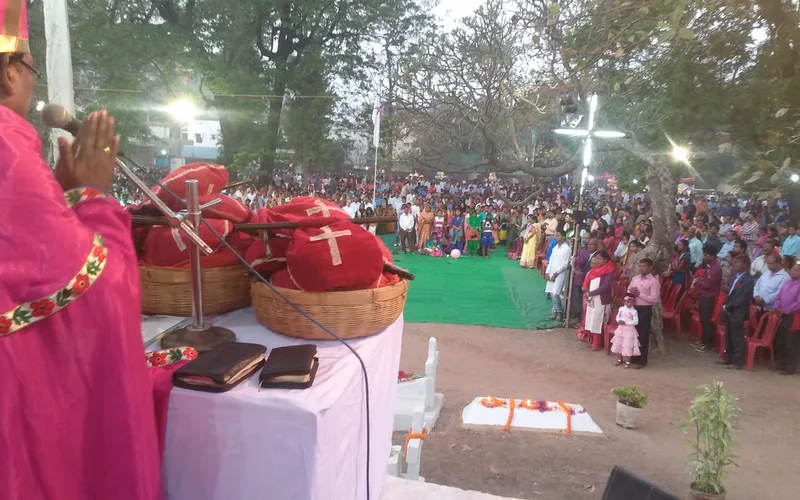
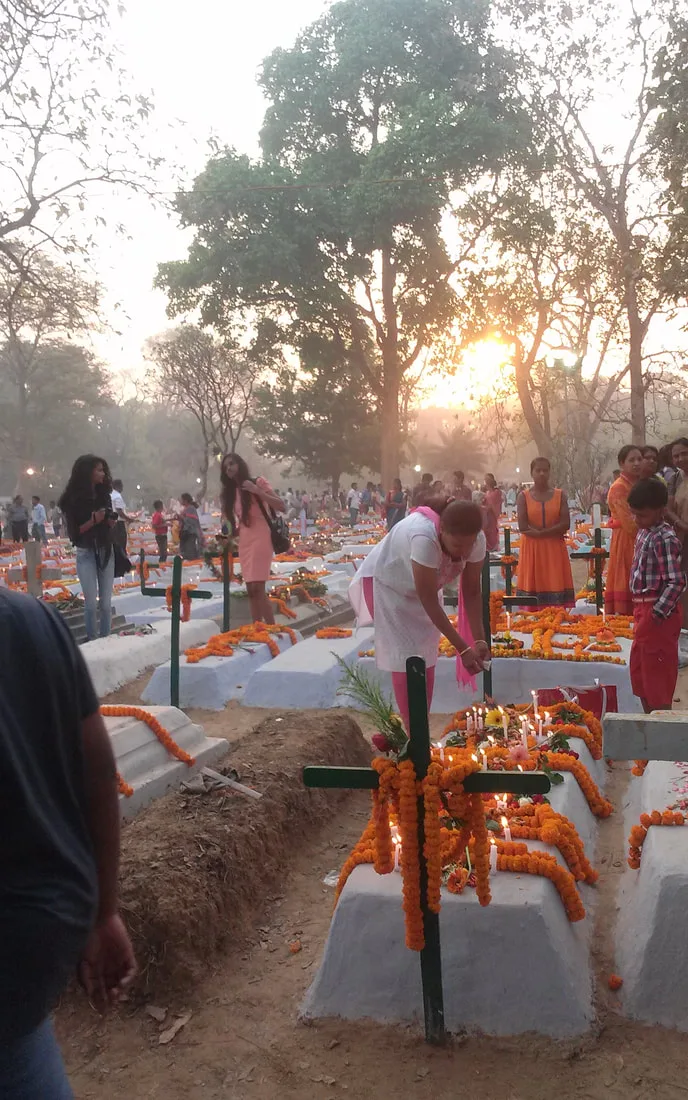
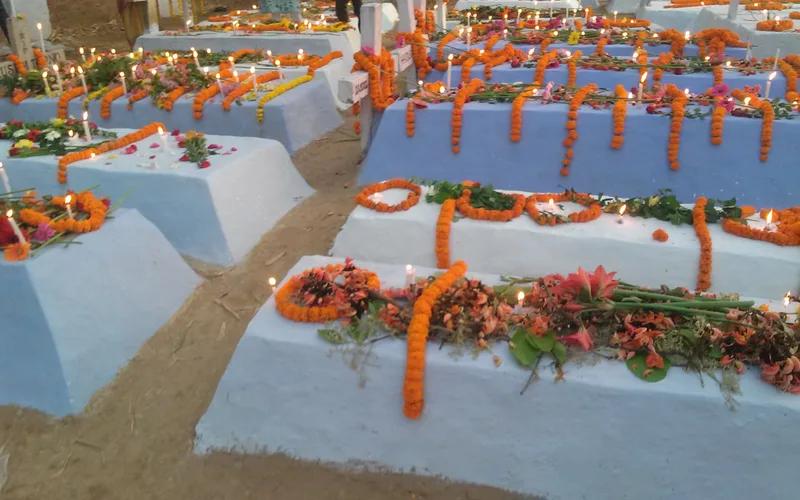
    Yesterday I was catching up with an Adivasi Christian friend asking how they were doing during the Covid 19 pandemic. They described some of their difficulties, and some of the things people are doing to deal with it, and then added, "But we are wondering how we are going to celebrate the Holy Days, such as Easter!" I was reminded of how Easter is celebrated in Jharkhand amongst the Adivasi Christians. It was truly the most wonderful Easter I had ever experienced. The people gather at the church before sun rise on Easter morning and procession to the grave yard and celebrate the promise of resurrection with the ancestors who have gone before them by decorating the graves with whitewash, candles and flowers. It is a community celebration.
    Sad to think that this year such an important celebration for this community would not be held, I answered: "I guess we will have to celebrate it like Jesus' disciples did. Locked up in our own upper rooms." 

    Think about it, they were isolated from the world. In some cases, such as with Thomas, separated from each other. They were fearful of what was going on, what would happen next. Fearful for their lives, fearful for how their association with (exposure to)  Jesus might impact their loved ones. They were forgetful, so that when two of them took a walk to get away from it all (on the road to Emmaus) Jesus showed up and had to remind them of everything that has happened in the world since the beginning of time, reminding them that they were all called for such a time as this. Those two guys were heading back to "business as usual" and they were reminded, from now on things are not going to be normal. "Behold, I am beginning a new thing!"

    We may not be able to congregate for easter, but we will celebrate it, by experiencing what it was like (maybe just a little bit) on that first Easter, in lockdown in our own upper rooms. We will need to be reminded about humility, mercy and justice that God requires of us, as we become his hands and feet, mouth piece and ears, for those who are suffering far more than we are. We are going to find that eventually we can go out, like Peter and John did when they eventually ventured out to the temple. They told the man begging on the side of the road, "We don't have any money, but this is what we do have." And they shared not only a message of hope, but got the man up on his feet, "singing and shouting and praising God."

    Those of you who have the resurrection hope inside, you know this is a time to "let go and let God" (to use an AA phrase) this is the time to say" "I'm here Lord, use me.". This is the time to listen, to respond, to be imaginative, to be bold.   You can do that and stay well, stay safe. There are so many little ways we can move outside of ourselves and our isolation and truly celebrate the hope of the abundant life that was promised to us through the death and resurrection of Jesus.

    We may not be able to gather on the streets to shout in our King of KIngs, Lord of Lords, my Christian brothers and sisters. We may not be able to gather for our sunrise services. We may not fill our churches buildings. 

    There may be other uses for our time and buildings and networks that can help those who God so loved that He died for. We are the church, not a building. It may be that some of our church buildings will need to be converted into quarantine facilities, it may be that some of us will have to be on the front lines helping out in hospitals, it may be that we need to welcome in strangers who have no place to stay, it may be that we have to start doing some of those difficult things that Jesus suggested while he was walking on the earth. It is most definitely a time to pray, not just to mutter and peep, but to really confess our own complicancy, really cry out for mercy, really weep for the pain others are suffering, really ask for "God's will to be done here on earth as it is in heaven." And......yes......to celebrate Easter!
  • Published on

    Contributing to Adivasi Literature

    Image description
    My prayer goes out to all who are in lockdown, quarantine, or self-isolation during this Covid-19 pandemic. We are all challenged by this and some are most devastated by these developments while others are simply inconvenienced. We have an opportunity to be there for each other, even across the seas. It can also be an opportunity for us to resort to talents and tools that may have laid dormant in our normal life. Life for a while will not be "normal" so we must be resourceful.

    It is for this reason that I am calling for people to send me Adivasi stories that I will then post on this blog. Please submit short stories to maribeti2004@gmail.com.

    This is a continuation of the Preserving Our Heritage Writing Workshops that I conducted in 2018 and 2019 in India. To learn more click on this button.
    Here is an initial sample just sent to me by Cyril Hans in Ranchi
    Friday 27 March 2020 
    Sarhul (Flower Festival), Ba/ Baha Portob (in Mundari, Santhali, Ho). Celebrated today. Owing to lockdown no usual processions of revellers in town this year. 
     
    Sher Shah Suri in 1538 stormed the fort of Rohtasgarh in Behar on the day of Sarhul festival. Milkmaid going in and out of Fort told the Afghan soldiers a secret. That Oraon men are usually drunk on this day. So the soldiers attacked the fort to capture it from the Kurukh speaking  Oraons on Sarhul day. It was Singi Dai (सिंगी दाई), D to be pronounced as in (the), who along with her friends, Champa and Kaili led the fight, dressed as men. Mighty Afghans did not believe until told by the milkmaid to watch the Kurukh women fighters washing their faces by both the hands in the stream, as against men who normally use one hand to wash their faces. 

    Another example is this lovely article I found published in The Hindu in 2015.
    Please, click botton to read:
     (by Cyril Hans)Here is yet another example of recording a story that is told and retold of an elderly Ho couple: 
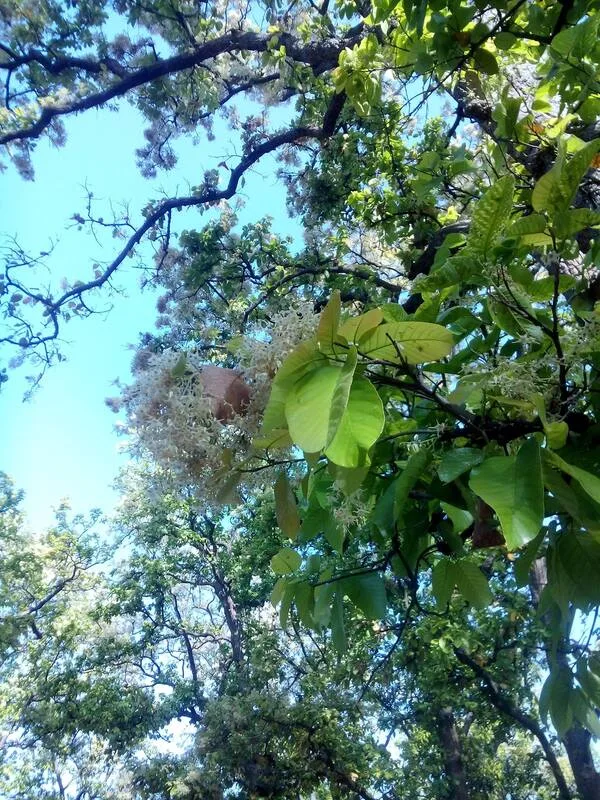
    One day there was no rice at home and no food was being cooked. But the household help boy found the leaves of the tree at the back of their house. It is eaten by all tribals in Chota Nagpur, and is known by various names, as Munga, Sajna, Sooti, (drumsticks) etc. and is considered a medicinal plant and tree. Because its leaves, flowers and long green fruits are eaten as vegetable and its barks and even roots are medicinal. Leaves are considered good for controlling blood pressure. When it was served to the old couple after boiling it, either a visitor or his helper boy was said to have declared, ‘this old man said such a long prayer even for a small portion of this green leaves as a whole meal!’​
    ​------------------------------
    Also see what Ferdinand Hahn wrote early in the 1900s about the Oraon celebration of the Sarhul Festival:
    https://www.amongtheoriginaldwellers.com/selected-readings/sarhul-festival