• Published on

    When the Enemy is unseen

     It seems to me that a giant reset button is being pushed as many people quarantine themselves out of obligation or preference. When China shut down, the satellite images showed a dramatic decrease in pollution, the canals in Venice Italy have turned clear and reviving sea life, parents are spending time with their children, young people are making choices on behalf of the elderly. I generally live a very isolated life, when I am not traveling, so nothing has changed for me, except suddenly I feel I am in community (there are others in the same boat as me---social distancing of course).

    Governments are addressing the pandemic in military terms, as they are prone to do. I fear that it can turn authoritarianism into greater authoritarianism, every state will look more and more like a police state. But in general I don't only look at what governments do, but what is happening on the grassroots. Its like a rock, when you pick up the solid unmoving mass there is life swarming underneath.

    I hope each one of you can be the change you want to see. Your motivation may be out of fear or out of grace. May all of us have our love button reset.

    So I have, as I alluded been in isolation for some time. For a while I was struggling to get into some kind of rhythm, and increasingly I have become more productive. I am starting my new novel and also working on an event (actually a couple of events) that will be in 2021. Since returning from India I have been analyzing what the writing workshops that I held in India were all about, I hope to see the paper I submitted to the Journal of Adivasi and Indigenous Studies be accepted and published in August. The project to publish in India is kind of on hold as I wait to hear from those who I am working with in India.

    In regards to the novel I am finding that I can write about how I and my ancestors discovered and lived among another culture (as I did in Among the Original Dwellers see website), but the question about how I can authentically represent that other culture is a true challenge. The novel is about a relationship between a missionary women (Doris) and an Adivasi Oraon woman (Singhini). I must do so much more research to get Singhini's side of the story. 

    I am doing a great deal of soul searching about my true motivations for writing about this other culture that I do not "know". Why is it important? In many ways I wish to carry on the legacy of my ancestors, great=great-grandparents. I am concerned about the attack on all minorities in India right now, that is most glaringly apparent towards the Muslims, but will and is spreading to all who are not in the Hindu fold. I am conscious that voicing such a concern makes me a rebel-rouser and puts me in a precarious position. But it is because, even though only an expat. I have a great love for India and I do not wish it any harm, or to self destruct. 

    And so this brings me to the title of this blog. Who is the silent enemy? Who are we opposed to, what are we fighting against? Not to use military terms, but medical terms. Immune systems must be strong enough to fight this Corona virus, the silent enemy. What of our social and moral stamina, is it immune to the silent enemy that can so easily divide and conquer.  

    As I say, these are questions I am considering. Thought since it has been such a long time since I added to my blog, I would share these thoughts.
  • Published on

    Merry Christmas

    Picture

    Nativity Scene: Fank Wesley

    December 2019: Christmas thoughts from Mary Girard
    (also posted www.amongtheoriginaldwellers.com)
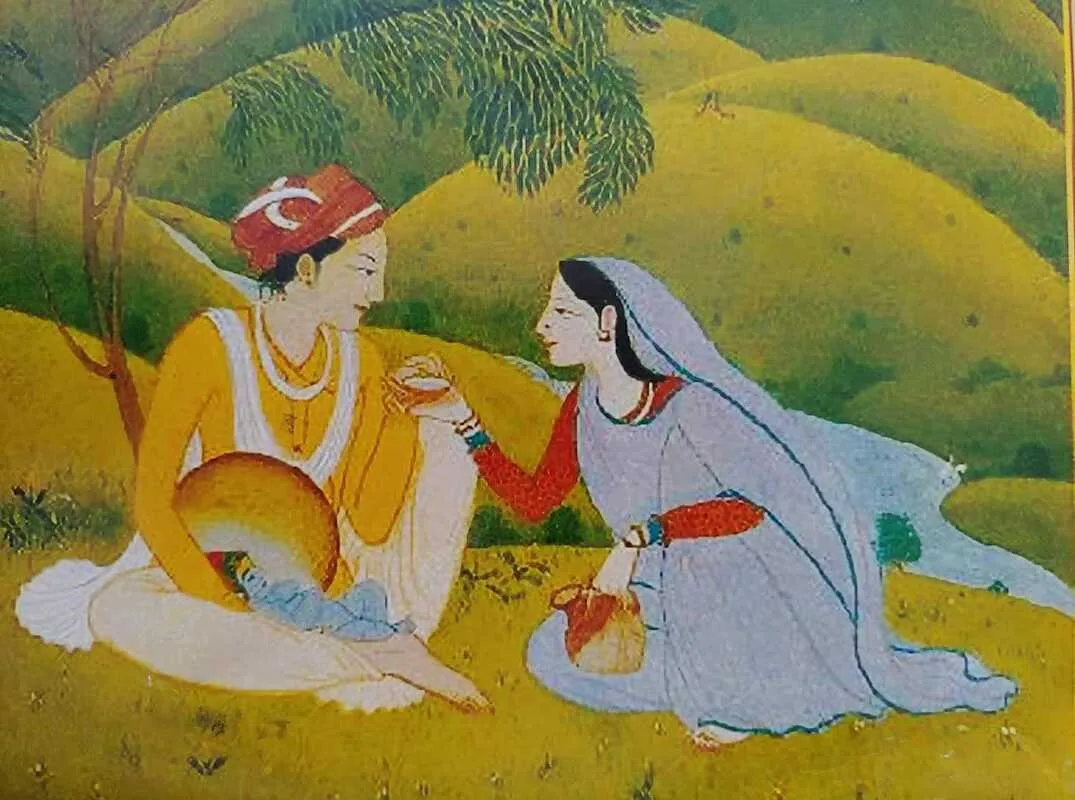
    I was so blessed when Joy shared this picture on Facebook. Though I had studied art under the Christian Indian artist, Frank Wesley, and have a book of his work, I had never seen this one. It clearly is his work; incorporating the message of God among us (Emmanuel) in the classical Kangra Valley style with Indian symbolism. I just love the fact that there are hardly ever nativity scenes where baby Jesus is in the arms of Joseph. As I care for my aging father I am more and more aware of the important role of the active father in a child’s life (from infancy to the end). 

    Enjoy meditating on this picture and reading the comparative birth stories in Matthew and Luke this Christmas season. May new insights of love, joy, peace and hope be birthed in you in the midst of a world; that is on one hand as beautiful as this, but on the other hand  is just as cruel and oppressive as it was in the time of Jesus.

    This past year has been so rich. I published my first book (through Lulu.com) and have had a few opportunities to promote it in the US and India. As I await efforts to get the book published in India (after a careful edit) I will continue to promote the publication in the US and Europe this coming year (starting in Florida in January) For those of you who have had a chance to read it I would appreciate if you posted your candid reviews on Amazon, Lulu, GoodBooks, Barnes&Noble or where you might have purchased your copy. My goal is to increase sales of the book in the West by 3 fold.

    And when I say “candid”, I mean that. This was a challenging book to write. There were so many varied readers who I wrote for: academics, Christians of various ilk, those concerned with social justice, history, psychology and culture, as well as the Adivasi themselves and the general Indian population that see afresh their own history. I’m bound to step on a few toes or to confound others. I already know that some readers have found the book has spoken to them on an emotional or mental level. My main hope is that it ignites thought and even conversation about our complex world and histories and that the cause of the Adivasi and Christian minorities in India will be known.

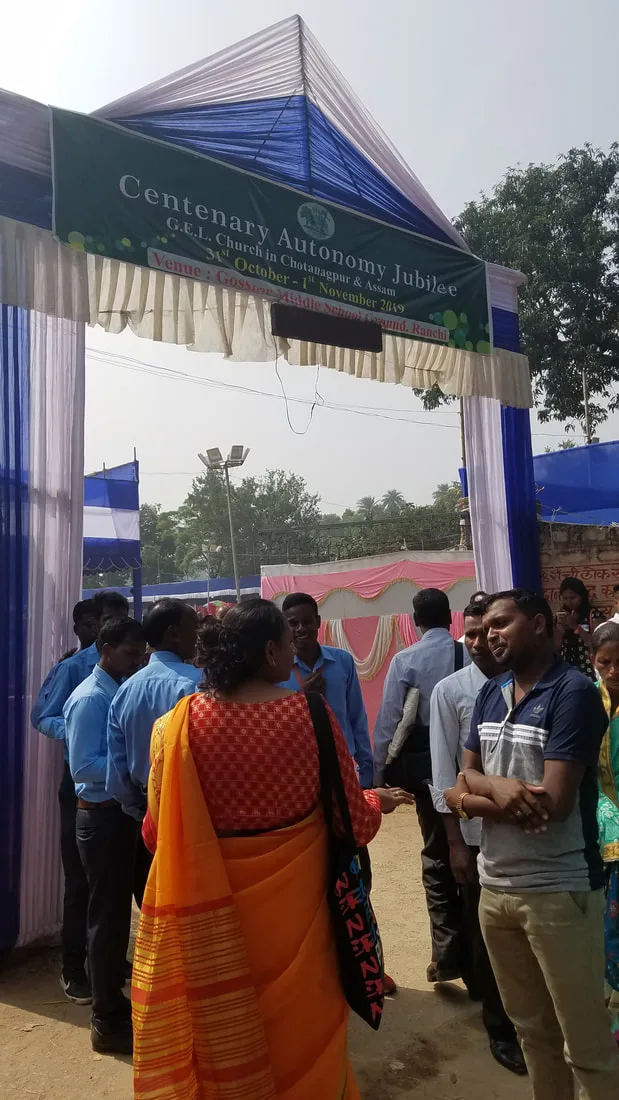
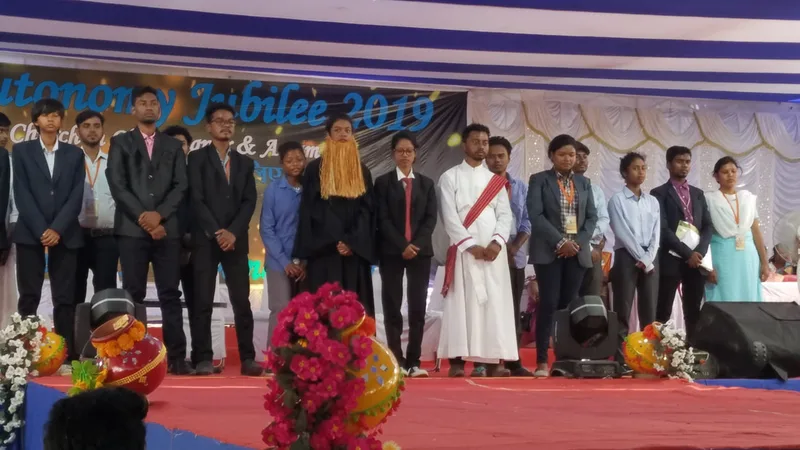
    I was very happy to attend the Jubilee Centennial year of the Autonomy of the Gossner Church (Evangelical Lutheran and 90% Adivasi). It was wonderful to join the churches in celebrating their culture, community, history and their Lord.

    Celebration of NWGEL in Malar July 2019
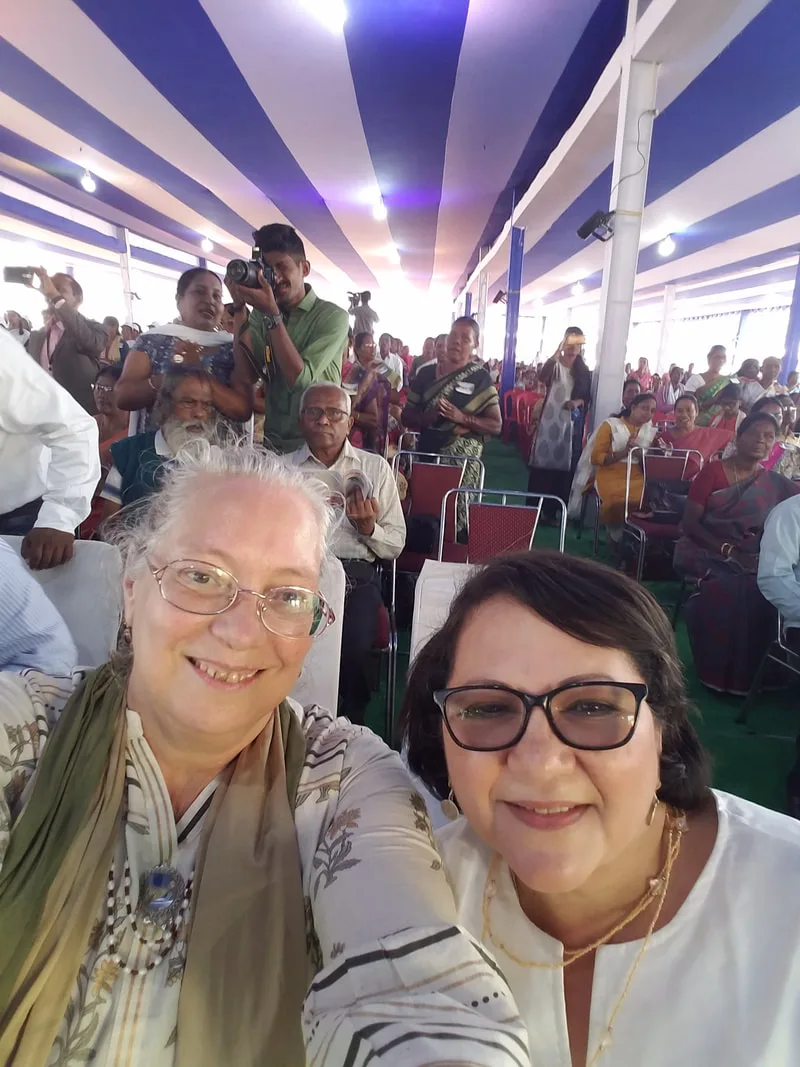
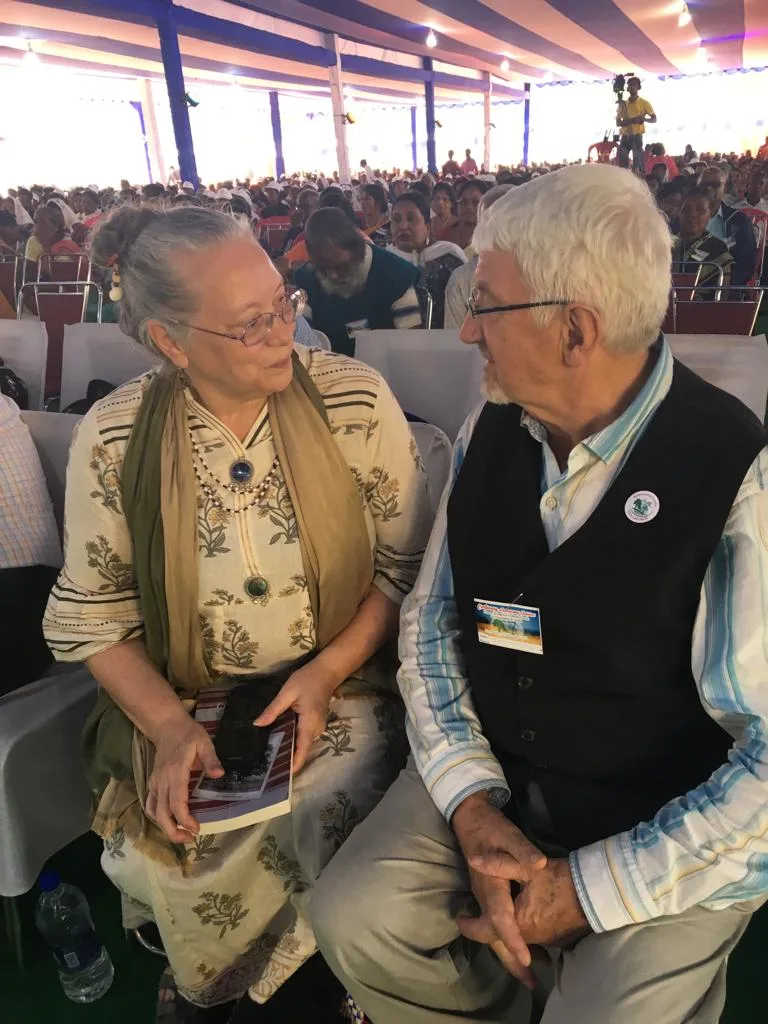
    Celebration of GEL in Ranchi November 2019
    Glad to have shared joy                                      Met my cousin, Klaus Roeber
    and adventure with Delia                             whose ancestor was Alfred Nottrott
    I also enjoyed speaking to many groups in India about the process and reasons for preserving and learning about and from their heritage and the unique Adivasi history. It must be documented or written down as the oral agriculture-based culture is perpetually diminished. On my next blog post I will share more details about the writing workshops that I have done and plan for the future.

    In October I also enjoyed visiting Chhattisgarh for the first time since 1976. Since the monsoon was lingering everything was so green and fresh. Though I have little personal memory of my childhood home (ages 1-5) there are many family memories that were revived by my visit.
    Arriving at the house that where our family lived from 1951-1964 in Tilda
    Meeting Alfred (90 years old) our Kansama (cook)
    Now I have returned home in Madison and have to concentrate on caring for my 95 year old father, who is finally feeling his age. He has been an indispensable research assistant and translator for me. His work is not yet done as I begin to research my next book, a novel about the relationship between a missionary wife and an adivasi woman. Two bible study groups have been so key to reviving my soul and imagination this past year. My heart is filled with blessings. 

    My son Joel is still living in Chicago and so we try to meet up every month. Renee is farther away in Miami but always near my heart. They are both finding their way in this world and I couldn’t be prouder of them both.

    Much love to all friends and family, and even those who I have not as yet met. 
    Mary Girard (Madison, WI)

  • Published on

    Lament for Kashmir

     In preparation to my next return to India I am glad for the opportunity to return to the place where I spent most of my childhood. Some of us are so fortunate to have the chance to really live in or visit natural gems. The truth is the whole earth is so magnificently wonderful, there are just plenty of place that have been ruined by humans while others remain pristine and beautiful.

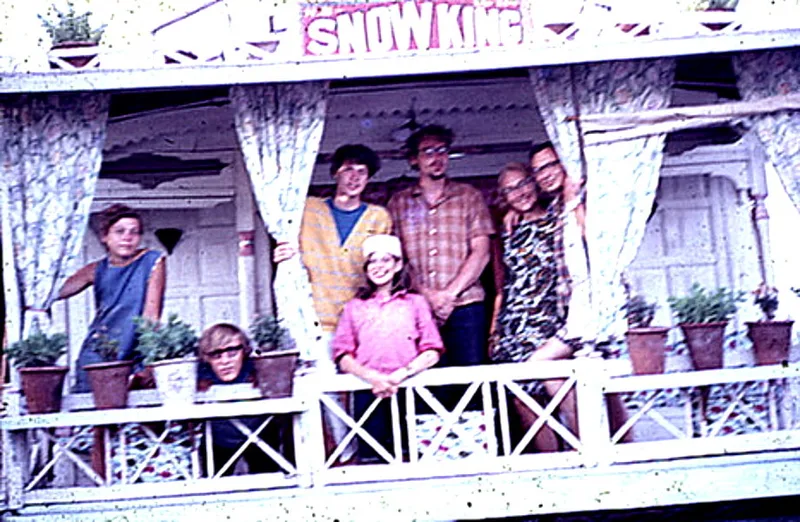
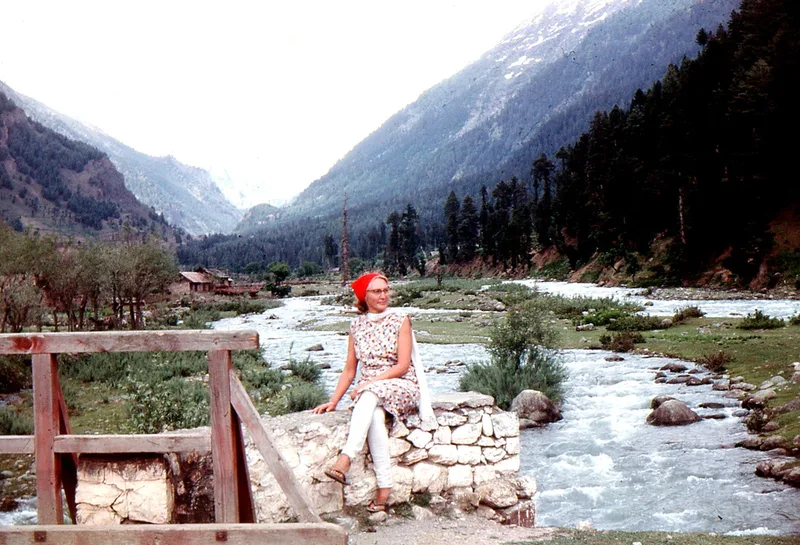
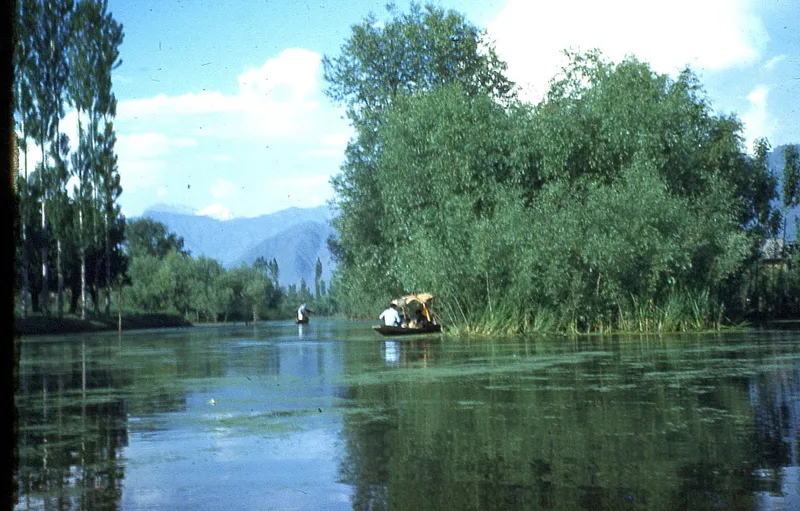
    When I was 11 years old I had the great chance to visit one such gem: Pahlgam and Dal Lake in Kashmir (these old family photos below do a great injustice to the beauty). I often wonder what they look like now, but understand in many ways it is unchanged. But now things are really changing.and will change fast.
    Now I love India. It is truly a remarkable democracy, and like any other nation it has its own challenges. For those of you who do not know anything about Kashmir I will give you a very over simplified summary of its history. In 1947, when India gained its independence from the 200 year rule of the British, a lot of things were decided that have continued to cause conflict in the region. The most obvious being the creation of a Muslim state (East (now Bangladesh) and West Pakistan).

    Around that time the fate of the beautiful region of Kashmir and Jammu,  the northern most region was also decided. According to Article 370 of the Indian Constitution (passed in 1949), this state, that had been a Princely state during the time of British, was given a special status, allowed to have rule itself autonomously (with its own constitution).Over the years details of this Article were changed as both India and Pakistan claimed large swaths of Kashmir.*

    A few months ago the Modi government dissolved the special status guaranteed by Article 370, claiming that it has held back development in the region. Now the people are under Marshal Law, much like the era of the Emergency in India (1975-77). Beside media censorship and blockage of the internet, children (boys at least) are being separated from the families and other Human Rights violations are happening, and the people of the region have had no say in this decision. 

    Again, I understand that there are always some larger "interest" used to justify such policies. This is seen in various forms in every country, be it self-interest, national-interest, sectarian-interest, corporate-interest or the like. Usually the interests of the voiceless masses are not taken into account, and it results in a lot of suffering and fear. There are big power interests in this region (such as China) and it is easy to quickly condemn a nation for trying to maintain security and vie for power. The politics and economics of the matter I will leave for others to argue.

    For now I just want to look at the human toll. I am simply asking you to be aware of, and feel the pain of others. WAIT! How can we possible feel the pain of those who suffer all over the world! We cannot hold all that pain in our finite beings. For this reason many decided to worry only about themselves or their own! "I am not my brother's keeper", let alone carer for strangers.

    There is a lot to mourn in our day and age, almost in every corner of the world. Much to lament all over the God's beautiful creation. Some happen due to the most evil intentions, other are done blindly with no consideration of consequences. I feel for the place and the people. I know it has remained pristine, exactly because of its special status. The suffering of the people, as outside powers and interest fight over it. This has been going on for a long time. It is most aggravated right now.

    It is interesting that as I get older, I have become less pessimistic. I do believe there is hope for those who are downtrodden. I do believe there is hope for the people of Kashmir and the beautiful land that it is.

             "Like daylight, the Lord brings forth what is right,
               And justice as the noonday" Psalm 37:6

    It doesn't just happen, people must be filled with love, feel the pain, have a sense that we are all brothers and sisters, committed to truth and justice, persistent in prayer, and advocates for those whose voice cannot be heard.

    -------
    * India will not allow a map of India that does not include Kashmir extending to its northern border.
  • Published on

    Presentations

    Though I am visiting India as a tourist, to see the place of my ancestors and to meet so many friends that I have made over the past few years, I am always asked to speak. This trip was no different, especially since people wanted to hear about the book, Among the Original Dwellers, that was as much about their history as it was about my ancestors. 
    These ​were some of the opportunities:
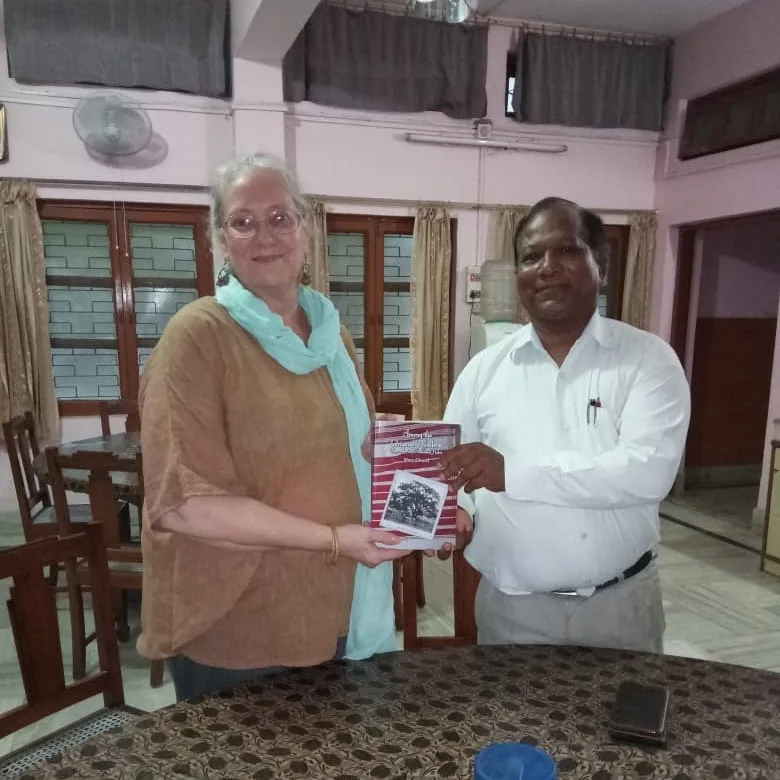
    • ​7 July Presenting Book to Gossner Theological Seminary @ the inauguration of the newly modeled Library
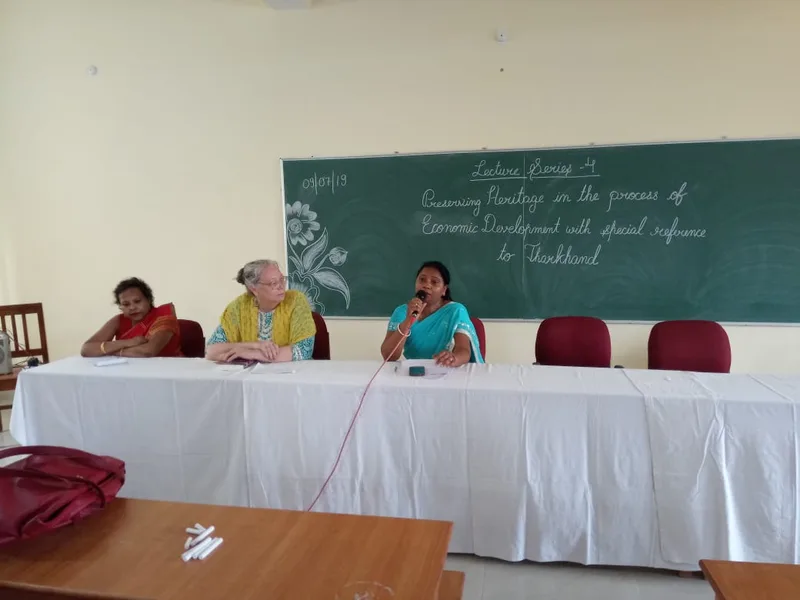
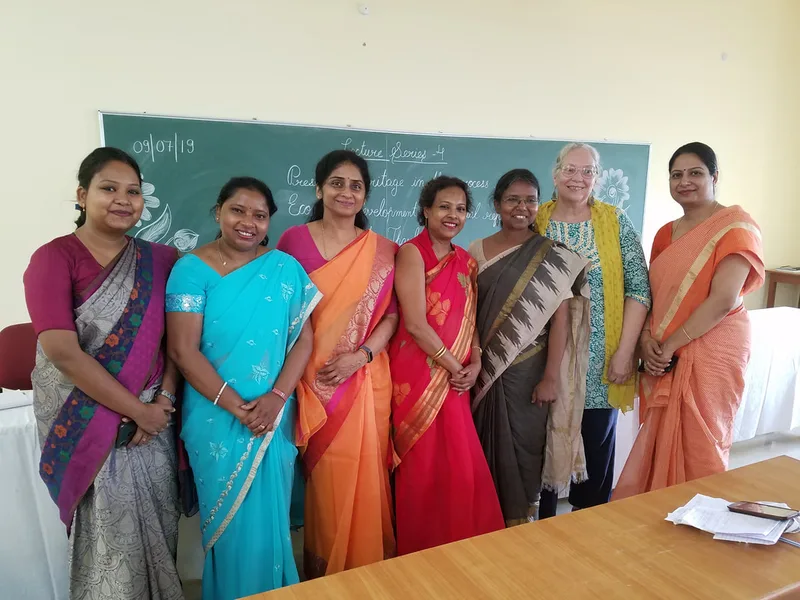
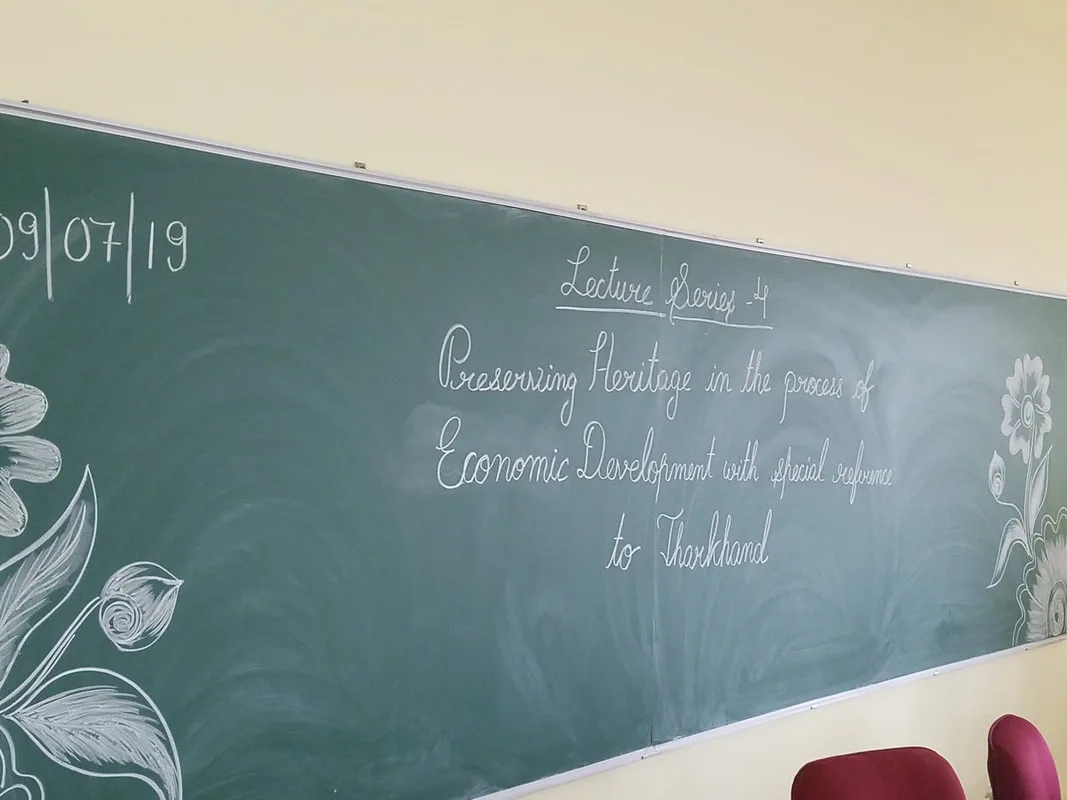
    • 9 July Economic perspective of the missionary era @ Nirmal College
    • 10 July Presenting Book to Gossner Evangelical Lutheran Church (GELC) and the Nwgelc at the Jubilee Celebration of Autonomy
    • 13 July Summary of Book and Themes @ Navin Doman Theological College (see recording below)
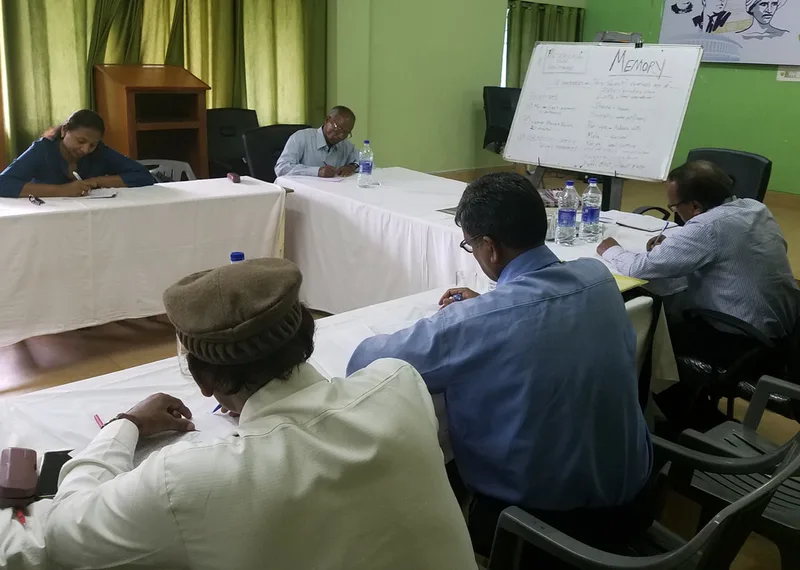
    • 14 & 15 July writing workshop (see some examples of readings in Hindi as samples of heritage stories).
    One hour presentation on Among the Original Dwellers, summary, achievements and themes. For B-Th seminary students of the NwGel and CNI.

    Listen to the presentation here:
    00:00
    00:00

    My Recording - 100101_001

    This is a great summary of the whole book: Among the Original Dwellers (2019)
    Short samples of stories written in Hindi and English of common day things that are (or were) part of Adivasi culture: Patri Bhat (leaf plate), Karya (loin cloth), Mara Jhail (peacock feather) (sorry for poor sound). If this inspires others who wish to tell other Adivasi stories please contact me. Eventually we hope to publish a collection of stories about cultural heritage.
  • Published on

    WhaT do i know about economics?

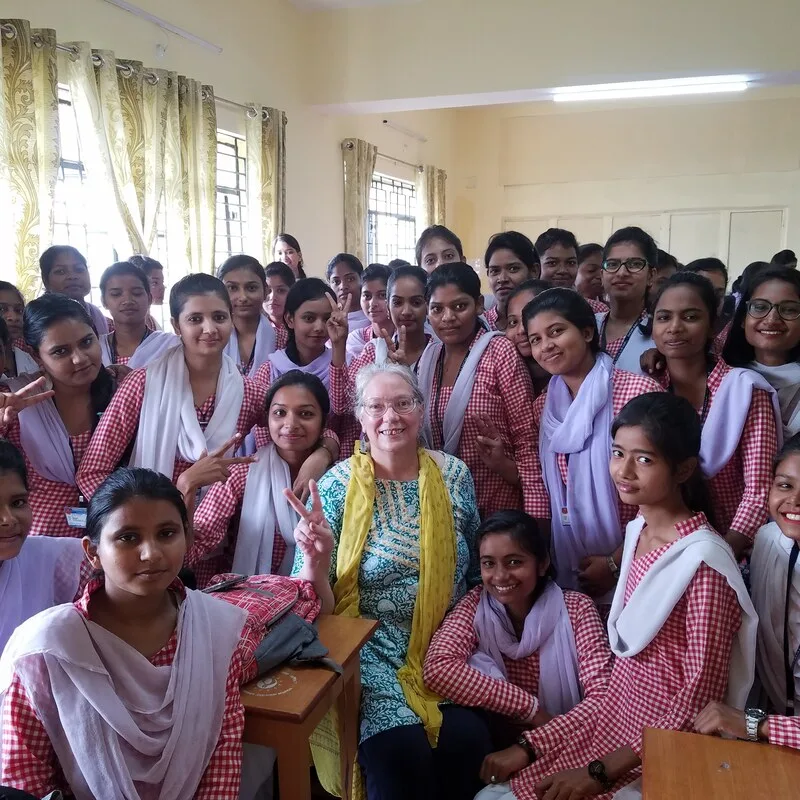
    What do I know of Economics? Evenso I was invited to speak at the girls Nirmala College in Ranchi, a Catholic College.  Dr  Nirmala Daisy Nilu Ekka who I met in 2016 has become a great friend. She is the head of the economics department and asked to present my book to her class and speak about economic development.
    Picture
    Once again I had to speak spontaneously after figuring out what kind of audience i had and what the hopes of the economic teachers were. I had to speak quite simply in English, because though it is an English Medium school most of the students had a hard time following the English. The teachers also did some interpretations and explanations in Hindi. 

    I have written my book through the lens of history and psychology, but I had not really viewed what the missionaries of the 19th century did was community develooment. The fact that some of the students were there from tribal families, who recently were merely farmers or laborers. It is develioment that their children or grand children, especially girls, could now be going to school. Both the principal and head of the department encouraged the girls to aim high and take this opportunity to learn from the past.

    One thing I emphasised as I told of Ferdinand Hahn's life was that each one of them had something to offer from their experiences. Ferdinand Hahn did not have the chance to go to high school or college. He was completely self taught. As they soon found out, despite that, he was able to do many things that ended up positively impacting Jharkhand.

    He came to Ranchi in 1868 and was married in the Gossner Church on the main Road here in Ranchi. He came believing that the message of Jesus Christ was a liberating one and hoped to liberate the Adivasi from poverty and oppression.

    Education was the first important tool for development. His first job was to teach in the boys boarding school. Soon he was asked to help tutor the seminary students. Here was a man who had no seminary education who was able to teach others. Just as i was speaking to them about Economics, with very little training in Economics. So i can only speak from my experience and the experience of my great great grandfather.

    Then i mentioned he went to Chaibassa for a year. This was because there was an epedemic and many missionaries and  their families died. It was discovered the well was contaminated so a new well was dug. I realised this to was part of economic develooment: clean water, food, housing, and education are key to any community's well being and development.

    After this he went to Lohardaga and there he spent much time learning about the culture and language of the Oraon tribe. He wrote down many of their folk tales and wrote the Kurukh Grammar that is still used today in Ranchi University or Gossner College where Kurukh is taught.

    In Lohardaga there were some members of the community who had contracted leprosy. Now in Oraon community they didnt outcast anyone who had leprosy, but the lepers themselves felt they were only a burden on the family. Now this was well before there was a cure   The only way they could contribute to the family was to beg and they didnt want to do that. So here again there is another economic develooment example. A small community was built for them with their own talab and mango grove was planted so that the lepers could receive care for their wounds and have fruit to sell to help sustain  Rather than criminalising or institutionalizing these poor sufferers he created a self supporting community. 

    Because of his work with the lepers he was asked to go to Purulia to administer the lagest Asylum in all of Asia  It was also at this time that he was asked to write about what he had learned about the culture. He was also asked to join Father Hoffman (Jesuit)  to write the Chota Napur Tenancy Act. which recognized the traditional waysthe Adivasi identify their land. This important land reform was central to the survival and development of the Adivasi up to today.

    That law was passed in 1908. The missionary noticed that the people began to really improve their farns immediately afterwards. He asked why they hadnt taken such good care of their fields before? They replied that if they had the land would only be taken from them . So this reform empowered them to return to their ancient agricultural wisdom.

    I wanted to tell them of the role of Christianity in Economic Develooment  In 1845 the first Lutheran mission came to Chota Nagpur (Jharkhand) their emphasis was to establish quality education. Father Lievens a Jesuit started a catholic church. His emphasis was to advocate for social justice the rights of the people.  At the same time the Anglicans (now CNI) started a church. Now they of course were closely associated with the British, the ruling power at the time. So the Adivasi had this saying: if you want power, become an Anglican; if you want legal help become a Catholic; and if you want education go to the Gossner church. We know that times change and that now the Catholics are known for education, but that is how it was then. The point is the church played an important role in providing for the needs of the community. You may think only the government or business engage in economic development  but churches and other NGOs play a very key role.

    Economic Develooment is important and vital for survival, but what was the problem with the British and still today , is that development often is done totally disregarding the people, their heritage and nature;  this is short sited. Nature is destroyed, community is destroyed and in the end we all suffer 

    So it is key to conduct economic development that keeps in mind the old wisdom, that gives voice to all sectors of society. to empower and to consider self-sustainability. Other values that were part of tribal economy were cooperation, reciprocity, community based  equality, etc. These values must be re-ignited and incorporated in economic development.
  • Published on

    An evenIng with Bishop Minz

    An evening with Bishop Minz and Paracleta. These are one of the first people to welcome us in 2016. I had know idea who they were then, but they were eager to meet the descendents of Ferdinand Hahn who put the Kurukh language into writing. He is a greatly honored man in Jharkhand, not only for his leadership in the church and in education for Adivasi but also for being active in the Jharkhand movement. Now in his 90s and his wife suffering Parkinsons disease, they were so eager to see my book and also to experience the hundred year jubilee of autonomy of the Gossner church in a couple of days. He wrote a few songs in Kurukh for the occassion.