• Published on

    July 04th, 2019

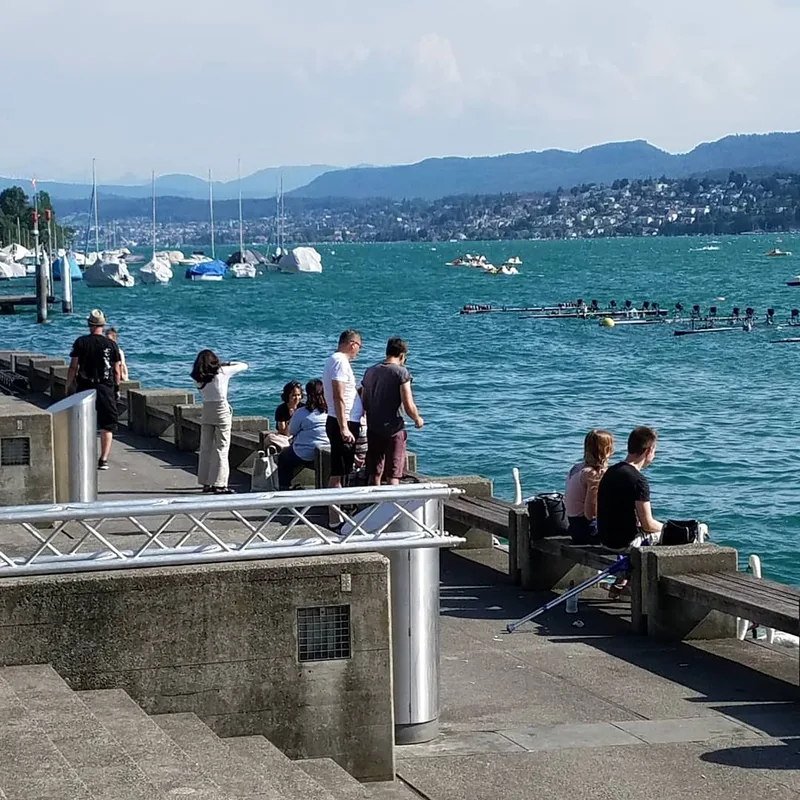
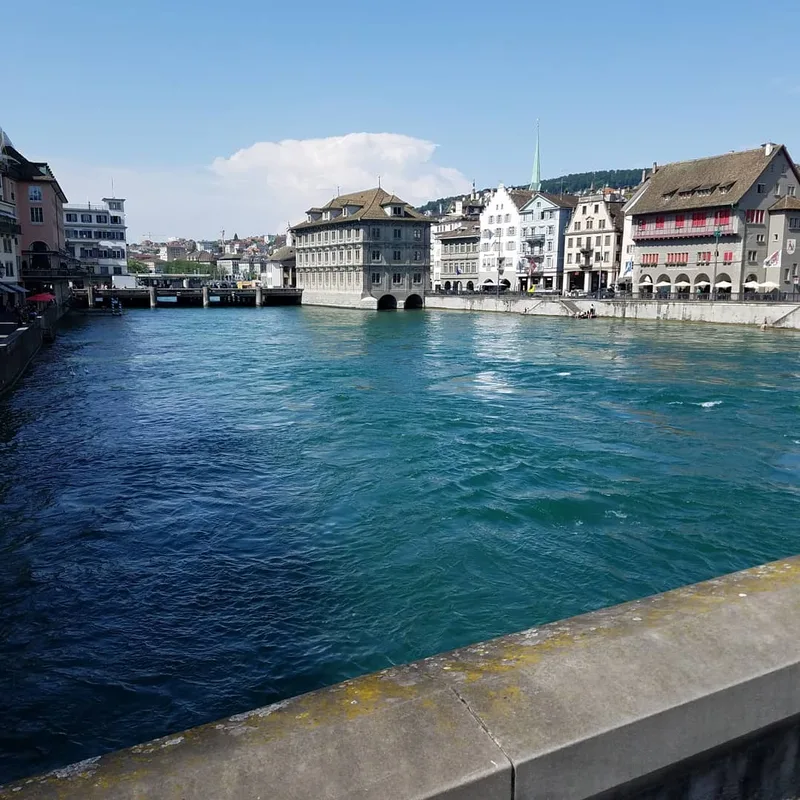
    I had a very lovely passage to India, thanks to a 24 hour layover in Zurich, where I enkoyed the lake and city with a cousin.
    Then i arrived in Delhi and rested for a full 24 hours.
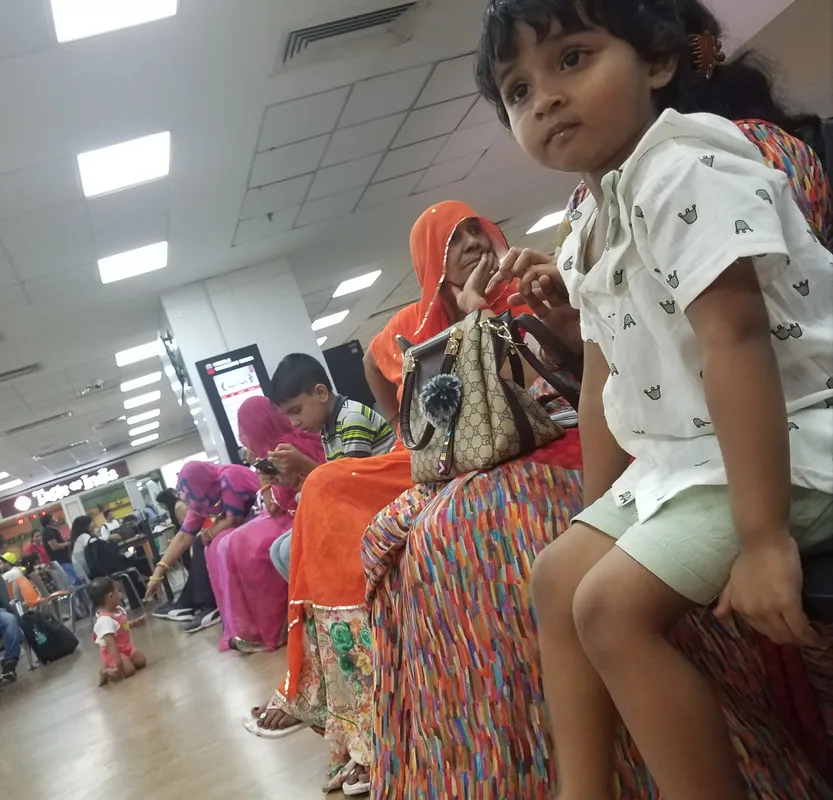
    On the 4th, I spent a long while at the airport enjoying watching all the different travelers.
    Picture
    I now am so happy to be back in Ranchi. I was honored to be greeted at the airport by Bishop Lakra and the General Secretary of the NWGELC. I have settled into my room at the guest house. I so enjoy the people here.
  • Published on

    Inspired by the Ancestors

    Picture
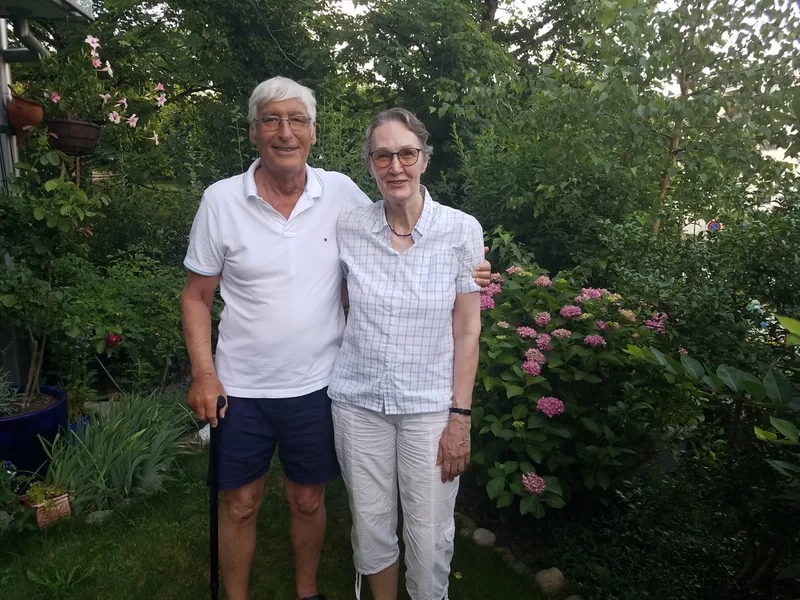
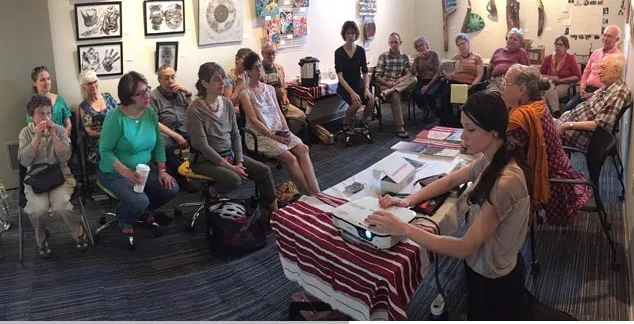
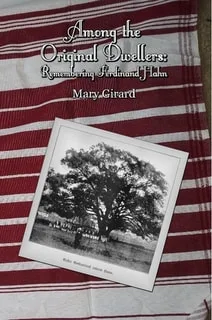
    It was such an honor to have 25 friends and family join me to celebrate the launch of my new book: Among the Original Dwellers. My cousins from my mom's side (the Heins) joined my family from Woodstock and dear friends here in Madison. I apologize to those who may have tried to join us but were dissuaded by another event that was happening in the same building. (Here is the the "bare" minimum of what you missed. ;-) )

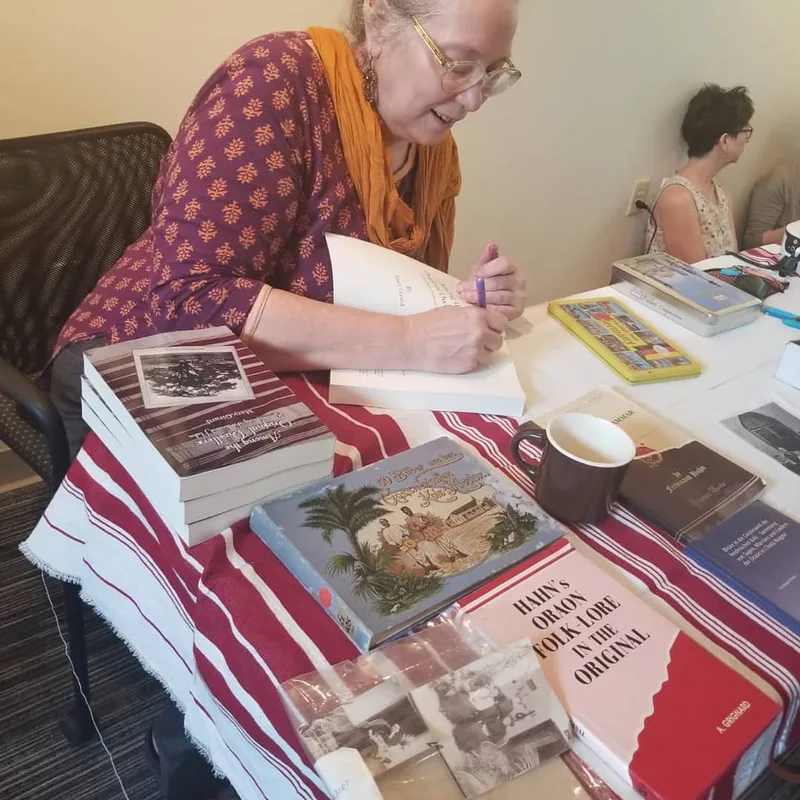
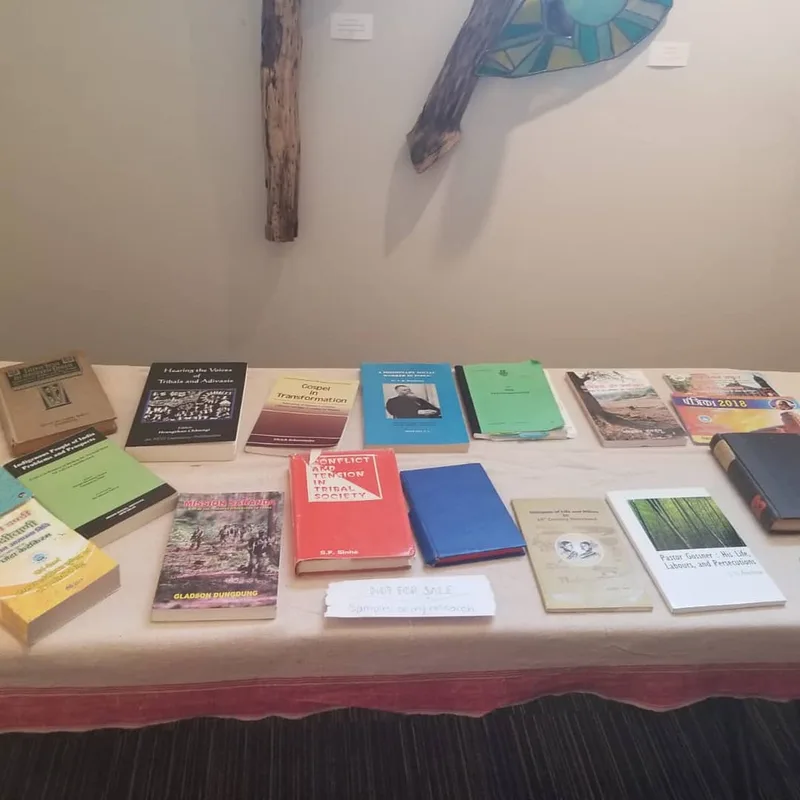
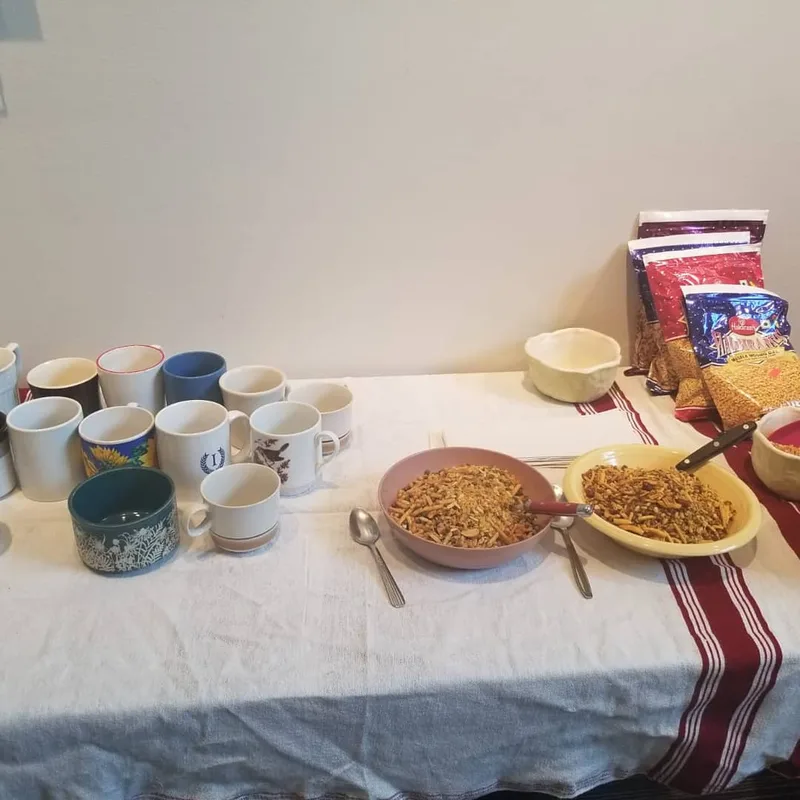
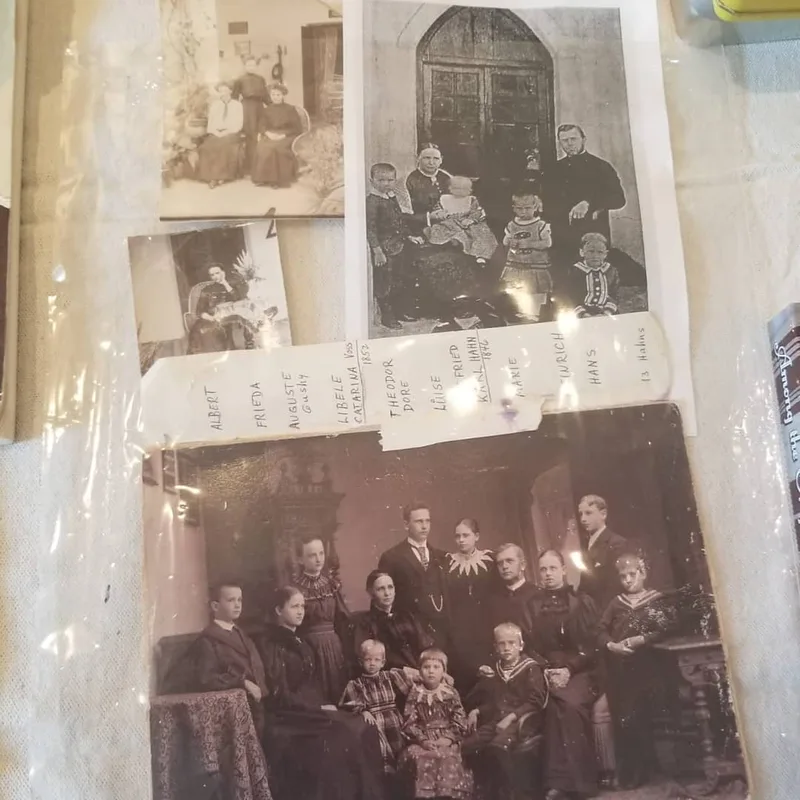
    I had on display pictures and some of my resource materials. As I spoke and answered really great questions we snacked on Indian snacks and chai. After a good hour I then signed some books. I am interested in promoting my book in your city, so please contact me to explore how such an event as this could be done somewhere near you!
    My resource materials
    I began by speaking about one of the more interesting experiences I had during my visit in Jharkhand, where most of the book takes place. At the time the region was called Chota Nagpur.
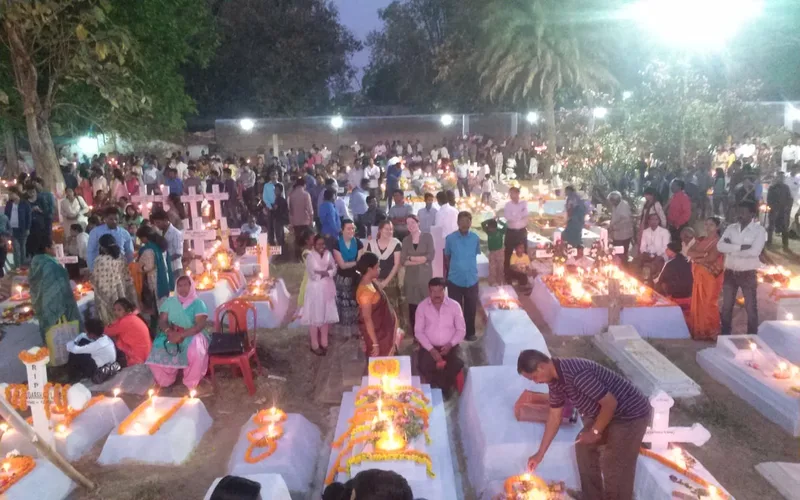
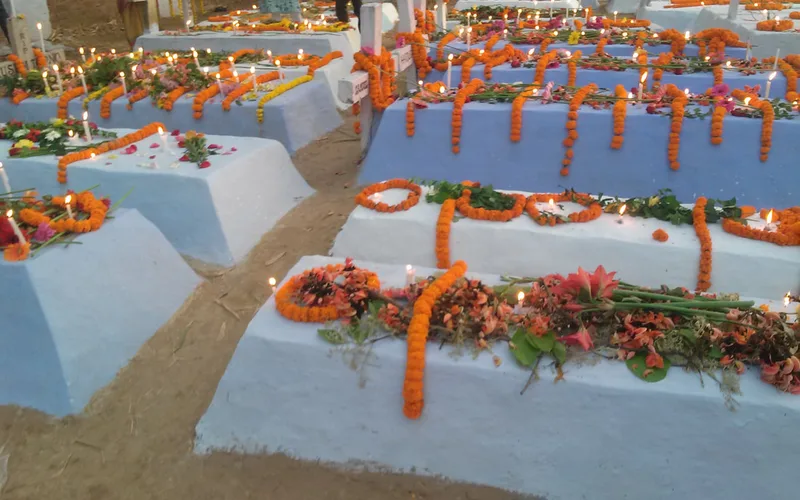
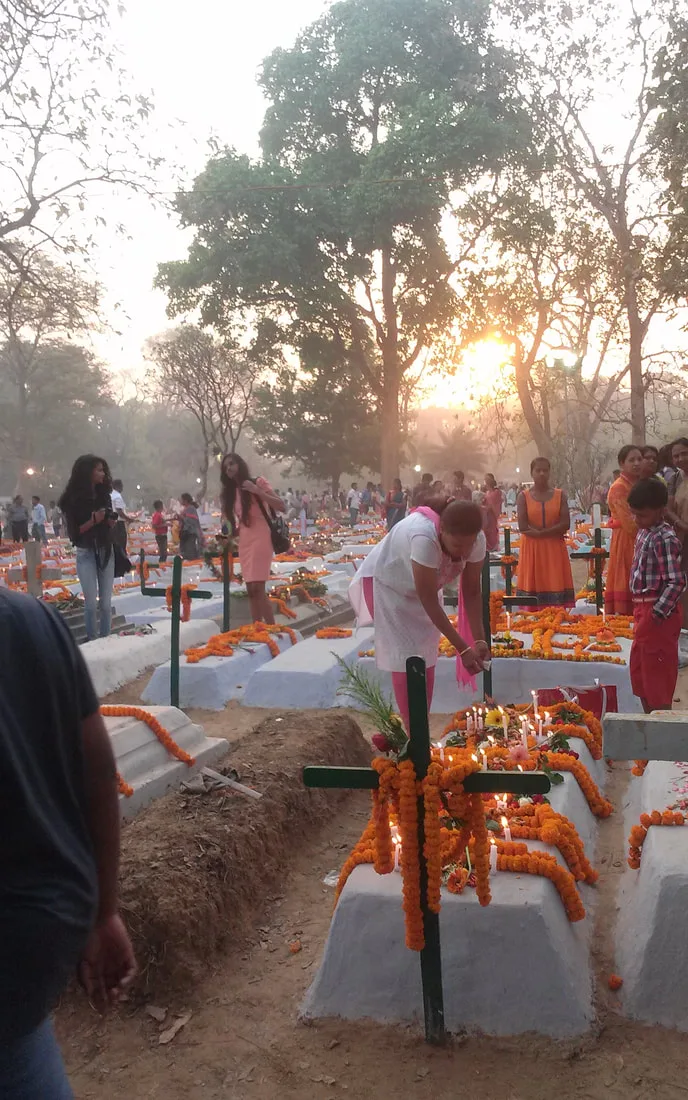
    In 2016 i celebrated Easter with the Adivasi Christians. Their celebration is the most unique it comes from a unique blend of Moravian and Adivasi traditions. The easter sunrise service takes place in the cemetery and the Resurrection is celebrated together with the ancestors. The graves, which generally are mounds of earth, are white washed and then decorated with flowers and candles before the sun arises. It is perhaps one of the most beautiful sights.
    I explained the traditional Adivasi views of life after death. The various tribes (two dominant ones were the Oroan and Munda) believe in one Creator God. They feel detached from that God and most of their spiritual concerns are appeasing the spirit world. Spirits are primarily ancestors who were not properly taken care of after they died and so did not go to their final resting place, but wander around as hungry and vindictive spirits. This is one of the reasons many Adivasi were drawn to Christianity, because it offered an escape not only for themselves but also their ancestors to be able to share a hope of a Resurrected life in the here-after, and also an redeemed and abundant life here on earth.

    This autobiography of one the the missionaries who helped establish Christianity here in Chota Nagpur, is about connecting with our ancestor's stories. The legacy of Ferdinand Hahn, my great great grandfather, is felt to this day by the descendents both biologically and spiritually.

    I then spoke of how the diary of his wife, Doris, inspired this story and my journey to research my family. This led to a journey to understand how globalized the end of the 19th century was so that there was a connection between Germany, England America and this most remote forest plateau region that was home for centuries to the Adivasi (indigenous peoples/tribals) of this part of India.
    I was also grateful that my 94.5 year old father, Ted Feierabend, was in attendance. He has been my greatest supporter, cheerleader, encouragers, sounding board, translator, research assistant and financier. He also shared some of his insights about this very important history.
  • Published on

    Book Launch

    Image description
    You are cordially invited to the launch of my first published Book:
     AMONG THE ORIGINAL DWELLERS: REMEMBERING FERDINAND HAHN.

    This is a biography of my great great grandfather who was an Anthropologist, Linguist, and Christian Missionary in India.
    In researching my ancestor, I discovered the story of the original dwellers among whom he lived, known as the Adivasi.
    This story speaks to globalization, heritage, culture, identity and community development in a cross cultural context.


    SATURDAY. JUNE 15TH 10:30 - NOON

    SOCIAL JUSTICE CENTER
    1202 WILLIAMSON STREET, MADISON

    Come when you can; leave when you must.

    PURCHASE A BOOK ($15) AND GET IT SIGNED
    SLIDE PRESENTATION
    INDIAN SNACKS AND CHAI
    BREADING & Q&A AT 10:30 AND 11:30

    KEEP EYE OUT FOR FUTURE BOOK RELEASES IN DIFFERENT AREAS.
    HTTPS://WWW.AMONGTHEORIGINALDWELLERS.COM/EVENTS.HTM

    Books are available now for $21 @ 
    http://www.lulu.com/shop/mary-girard/among-the-original-dwellers-remembering-ferdinand-hahn/paperback/product-24116379.html

    Keep eye out for future book releases in different areas.
    https://www.amongtheoriginaldwellers.com/events.htm

    lf you would like to host a book signing in your town please contact me and we will see what we can arrange.
  • Published on

    Overview

    Image description
    Among the Original Dwellers: 
    Remembering Ferdinand Hahn


    I began writing about my great gr0eat grandparents for two reasons. Like so many others, I wanted to connect with my ancestors story in search of my own identity and connectedness in the world. Having grown up in India, I wanted to have a clearer picture of the first generation who connected our German-American family to India. Their unique story in the nineteenth century of German missionaries working in British India among the marginalized Adivasi, however, gave me another reason to write.
    Having spent most of my formative years in India, I have always wanted to show the “real India”, with its complex cultural diversity, to those who are fascinated with its exotic spirituality. Very few know the story of those who are not Hindu, Muslim or Bhuddist in a country where nearly every religion on earth is represented. In India a minority constitutes more people than in many parts of the world. 8% of the population of India are Adivasi, About half of them are Christian. Few people know their story. In fact they also are in search of  their own history.
    I was surprised and honored to discover in my research for this book that my great great grandfather , FERDINAND HAHN, advocated for the rights of the Adivasi and helped preserve their culture. In fact, it was quite a relief for me to discover that during this colonial era how Christianity played, and continues to play, an unique and important role in the liberation of the oppressed Adivasi. Having this fresh understanding of the colonial era, during the European migration, before the World Wars, I was intrigued by the extent of globalisation and how it has shaped everyone, even in the most remotest parts of India.
    The story covers the scope of Ferdinand’s life, from his desire to escape the confines of his parochial village in Germany, to his spiritual awakening, and adventure to  a region, known as Chotanagpur in eastern India. Here among the Adivasi, the original dwellers or indigenous people of India, who are oppressed by the Indian majority and British rulers, he comes to appreciate the diversity of culture and social conditions. Ferdinand seeks the liberation of the Adivasi, both spiritually and temporally, through education, social services and advocacy, as well as through establishing a culturally relevant Adivasi church. The narrative braids his personal family story in with the unique role of German missionaries in British India
  • Published on

    The Telling of a Story

    Picture

    I love stories. I listen for the details of the stories. I also listen for how the story is told. In truth, sometimes when someone tells me anything (for anything is a story) and it is told in my style, it can be harder to listen. I jump to thinking I know. I have to work at not only being willing to listen, but also willing to tell my story. Both can be intimidating. There are many examples not only of stories but how stories are told that come in to my life every day.

    My life at late is all about storytelling, as I finish up one book and start on another. My father is busy translating into English "50 Bilder aus der Gossnerschen Kols-Mission (Fifty Pictures of the Gossner Kols-Mission) written in 1895 (Hahn and Kaush). There is also a Hindi translation that is in the works of being published in India. This book with its pictures provide us with such great examples of the early Gossner church in Chotanagpur, that now is celebrating its Jubilee Centennial of Autonomy.

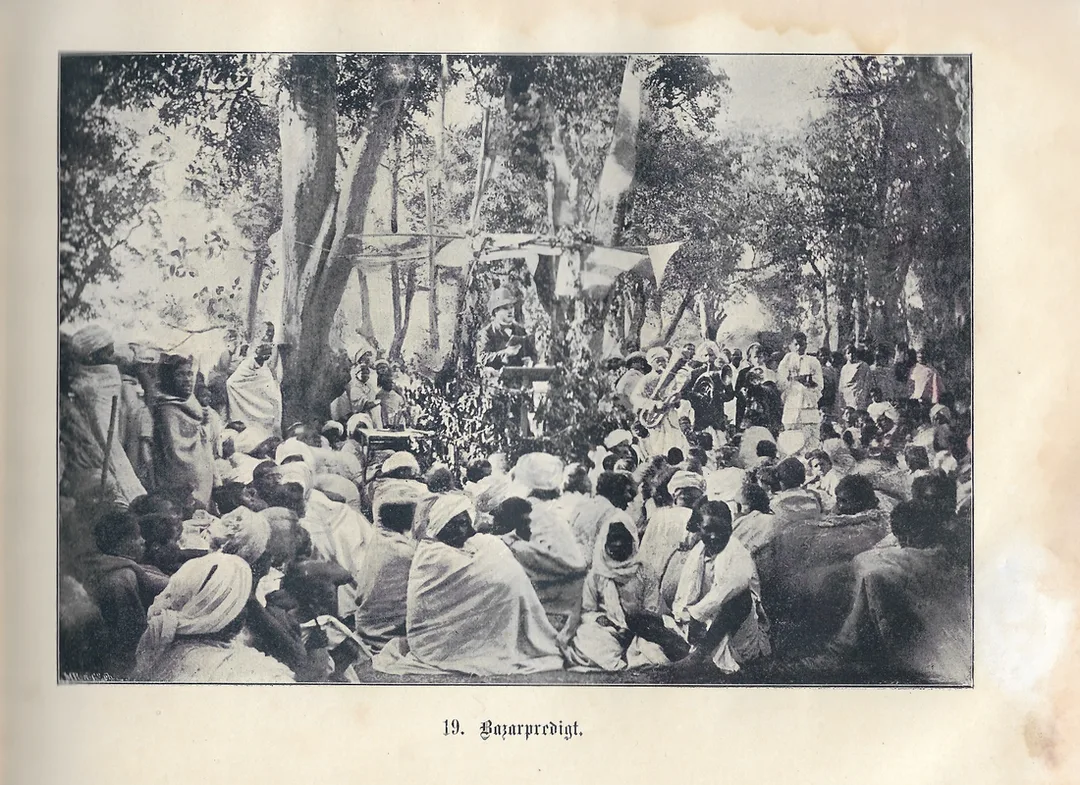
    He is always very anxious to share with me some of these great stories. Today I will share one of Missionary Eckert's observations about preaching in the market place. Take note the picture above shows the missionary preaching, but Christian Adivasi men and women would spend most of the time talking to the crowds during these Melas (market days). When we think of preaching we do not see it so much as simple story telling. But since storytelling was such a part of this tribal culture, the missionaries quickly picked up on the centrality of storytelling in all of life.

    Eckert is quoted as saying, "it is very difficult to get into the thoughts of the non-believers. You   can not preach easy enough. While I was living in the provisional home of  Büchselpur Station, I had the opportunity to hear the conversations of the people. One tells, for example one thing. First, he tells it quickly, then he
    repeats what he has said two or three times. Finally, his listeners are initiated into the story and its telling and are immensely happy when they understand what the speaker said. There is a big difference among the audience. People who have been at school can follow our train of thought, but others must be treated differently. Words and phrases such as penance, faith, love, Savior, heaven, love God above all, and so on, are completely incomprehensible to them. All that has to be learned first. (It is not necessary to mention that in older Mission communities the state of religious life is higher than in the case of these beginners in the faith.)"


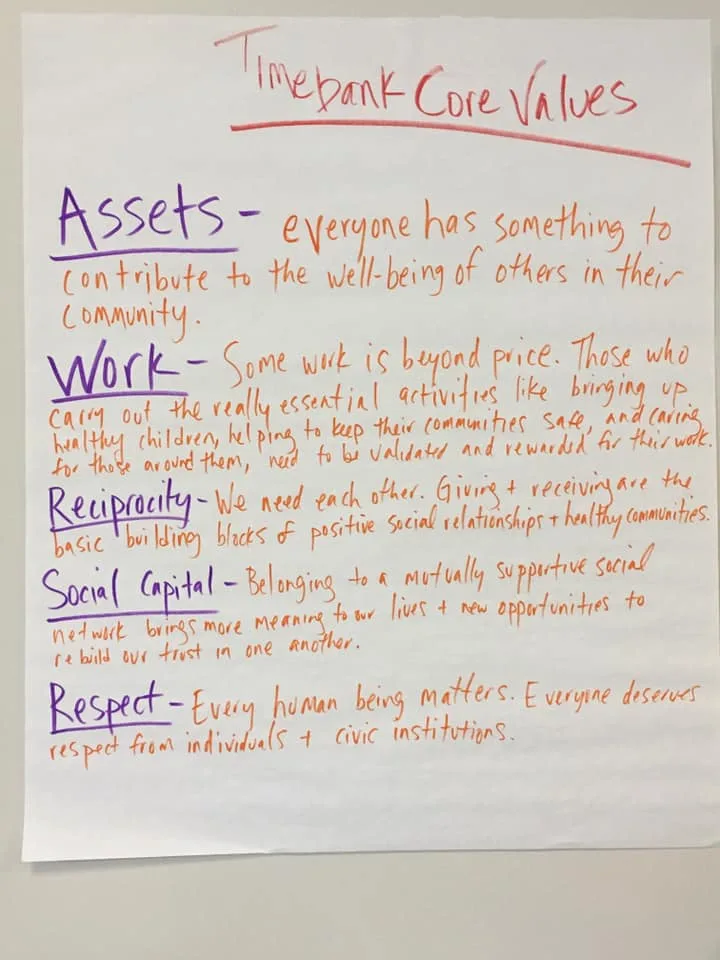
    Many preachers incorporated this storytelling and interactive style into their preaching. I am curious to find out from readers (anywhere) how much this style resonates with them. An example at my work with the Dane County TimeBank shows that we share some core values (see picture below) but I still think every single member of the Timebank would tell different stories about each of these values.

    This is of course a religious example using unfamiliar words and phrases, but I noticed in many different meetings that I have at work and in the community, how we don't always share common vocabulary or common values. Even in identifying those values, we do not always view them exactly the same.

    This is why I believe it is important to tell stories, and to read. We can only know each other, history, or work together if we are able to listen to the stories of others. Truly listen. But so much is in the style of telling. Sometimes it is hard to listen, because of the way it is being told, in addition to the perspective and the language used.

    I listen to Japanese News (in English) and our Public Broadcasting news and am struck with how the Japanese news is very repetitive and gives details that you never hear in American news (now this partly could be due to one of the purposes of this news program is to teach Japanese English). The American news can also be repetitive, because the context always needs to be reiterated. A friend of mine told me she gets frustrated with Indian news articles because they never give the context. If you haven't been tracking the story from the start, you have to be told it by one who has (through their interpretation, of course). 

    I really wish I could read literature in other languages. What's on my bucket list is to learn Hindi well enough so that I can read the newspaper (that uses a lot of big words) and books written in Hindi. My collection of Hindi books to read is growing fast! Unfortunately, I did not inherit the "easy-learning-language-gene" from my great great grandfather! I do however pick up the culture of language pretty easy: that is gestures, accents, styles. So many cross cultural environments I have been in, people actually think I know their language! 

    For example, once I was traveling from India to England as a young woman and sat next to an old Punjabi woman who sat cross-legged under her seat belt. When I sat down I greeted her with "Sat-sri-akal" and the whole trip she told me her life story. I only know a few words in Punjabi, but I could tell what she was talking about in generalities, and gave appropriate gestures that made her keep on telling the story. It shortened my 10 hour flight!

    Another example is one my dad likes to tell about my mother. They started working in a small rural hospital in India in 1951, soon after India's Independence and partition. There were Sindhi refugees that were relocated to a nearby abandoned military air-base. The hospital was having a very difficult time treating these people when they came in for treatment. Most of them were suffering PTSD (which was hardly understood at the time). My mother acted as the social worker and would go from bed to bed to visit the patients before the doctors and nurses came in. She was able to help them figure out what to tell the doctor about their concerns. Once she was at the bed of a Sindhi woman.

    A nurse came by and said: "don't bother to talk to her, she speaks a different language."

    My mother replied: "But I am speaking with her, I'm speaking the language of love and presence. We may not speak the same language, but I am learning all kinds of things about her."
    .
    Picture
  • Published on

    The Year of Jubilee

    Picture
    The Lutheran Adivasi Christians of Jharkhand and environs have recently begun to celbrate a very important event in their history. The event occurred in 1857 during the Great Rebellion (Mutiny). The first struggle for liberation, that most people know about in India, played out slightly different for the Adivasi Christians living in and around Ranchi. It was a time of feirce persecution that was endured at the hands of the powerful zamindars in the region (though the soldiers did seem to join in their rampage). 

    For several hundred years outsiders had been coming into the jungle region of the Chota Nagpur plateau, taking over land that had once been only the dwelling place for various indigenous tribes: the Munda, Oraon, Ho, Kharia, Santal, etc. These orginial dwellers coexisted with each other and the land the water and the forest (Jamin, Jal, Jungle). Their existence was threatened by the growing influx of the outside world that took over their land, labor, and livelihood. The battle continues on today. But through it all their tribal identity has not been wiped out.

    Between 1850-1857 some Adivasi were drawn to Christianity. The Christian message of liberation and belonging spoke to them deeply. The German missionaries provided them education and socio economic stability. Both the Indian and British rulers, however, were not well pleased with this and reinforced the landownership (zamindar) system that oppressed them and alientated from the livelihood that they were so connected to.

    When the Indian soldiers revolted against the British East India company, that was ruling much of India in 1857, the local zamindars in Chota Nagpur took this as an opportunity to attack the Christian Adivasi. Their homes and villages, books, churches and schools were attacked. The missionaries fled. But the 700 Christian Adivasi had to fend for themselves, under the leadership of the first convert among them, Navin Doman.

    100 of them, mostly children, were pursued into the jungle by armed men. The monsoon was in full force and the rivers were swollen. When they reached a river lightning miraculously hit a tree that created for them a bridge to an island. Than as equally miraculously, after all had crossed over the water washed the tree away before the armed men arrived.

    The group stayed on the island for several months, living off the produce of the jungle, using their age-old indigenous wisdom. Even after the river had dwindled into a small trickle, they stayed hidden away, unsure what was happening outside. The coast would not be completely cleared of the rebel forces in the region until the beginning of 1858. In the meantime, as the persecuted Christians shared with other Adivasi of how God had been with them through their terrible ordeal, others also wanted to join the Christian faith. By the time the Christian Missionaries returned to Ranchi a year later, they found thousand more Adivasi who were anxious to be baptised and learn about the Christian faith.

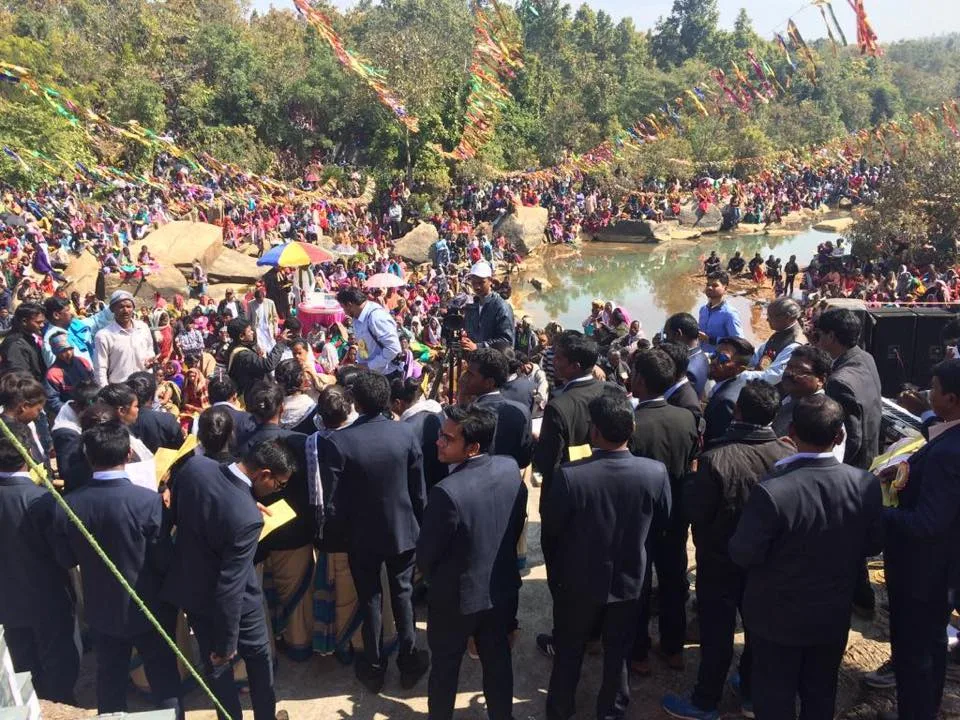
    Now, 169+ years later, Christianity has spread among the Adivasi of this region, so that about half of them are Christian (Lutheran, Catholic, Anglican or other).* The Christians celebrate this important event, Kristan Dari, on January 31st (when the river is almost completely dry) 10,000 come from all over for this pilgrimage and celebrate the Lord's communion together among the rocks and sand beds.

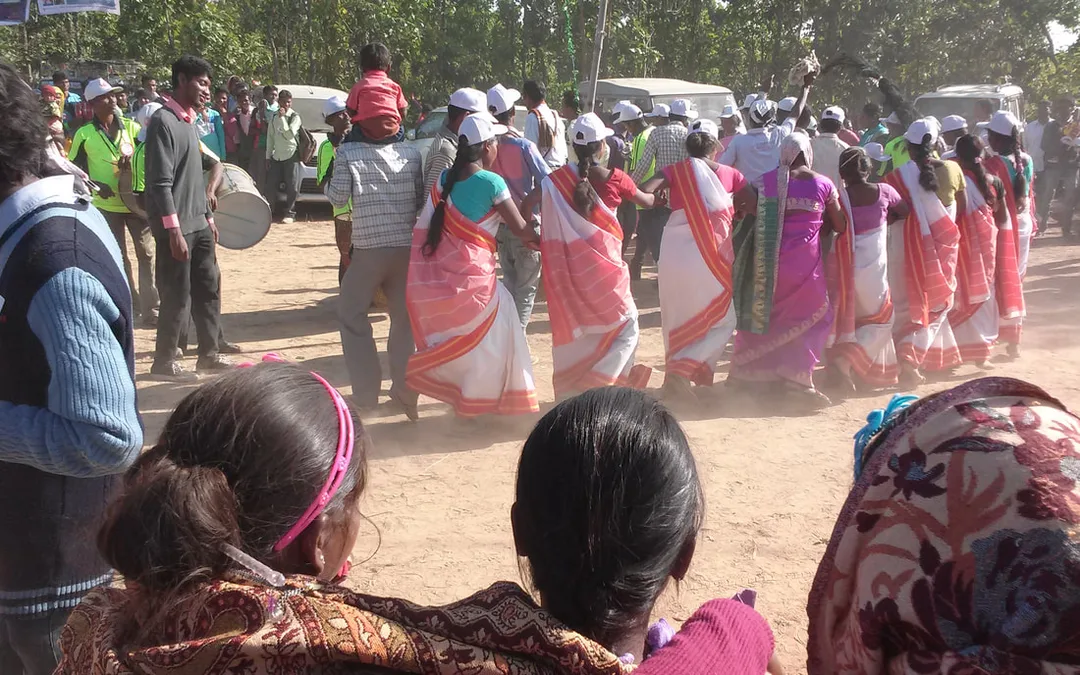
    This year is also the jubilee year (100th anniversary) of the autonomy** of the Gossner Evangelical Lutheran Church. The mother church and the offshoot, the NWGELC, will be having celebrations that I will attend in July and November. Other Christians will join in the celebrations, for indeed all Christians in the region share in this glorious legacy.

    For the Adivasi, whether Christian or not, these are very difficult times in India. Minorities of all kinds are facing pressures from all sides. Indeed a few have benefitted from education and economic development, but even they have not lost completely their connection to the Jamin, Jal, Jungle. They remain essentially tribal: and must not lose sight of the environment (their houses, fields, work, animals, plants, trees, weather and sky)***, their ancestors, their children, their community, their culture. 

    In the Bible the Jubilee year deals with land, property, and rights. Slaves and prisoners are to be freed, debts to be forgiven and the mercies of God would be manifest.  When Jesus began his ministry he heralded the year of Jubilee as a perpetual reality of the realm of God, which is not some distant reality, but a very present one, to be lived out. So my hope is that the Jubilee year of Autonomy will bring much needed justice, mercy, reconciliation, liberation, to all living in the land of the orginal dwellers (Adivasi).
    =======================

    * I hope to have the biography of my great great grandfather published by this summer: Among the Original Dwellers: The life of Ferdinand Hahnd. I make a case that the spread of Christianity had as much to do with the Adivasi as it did with the German missionaries.
    **Autonomy: 1919 the GELC (Gossner Evangelical Lutheran Church of Chota Nagpur and Assam) was granted autonomy by the British government. This means they ran their own church and institutions with only some support and partnership from the outside (western missions). This was the first native church to receive autonomy well before India's independence.
    *** Paul Wagner in Journal of the Asiatic society. collection of Mundari Riddles. 1908
    Picture